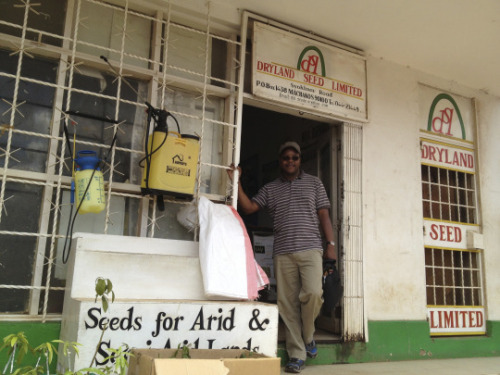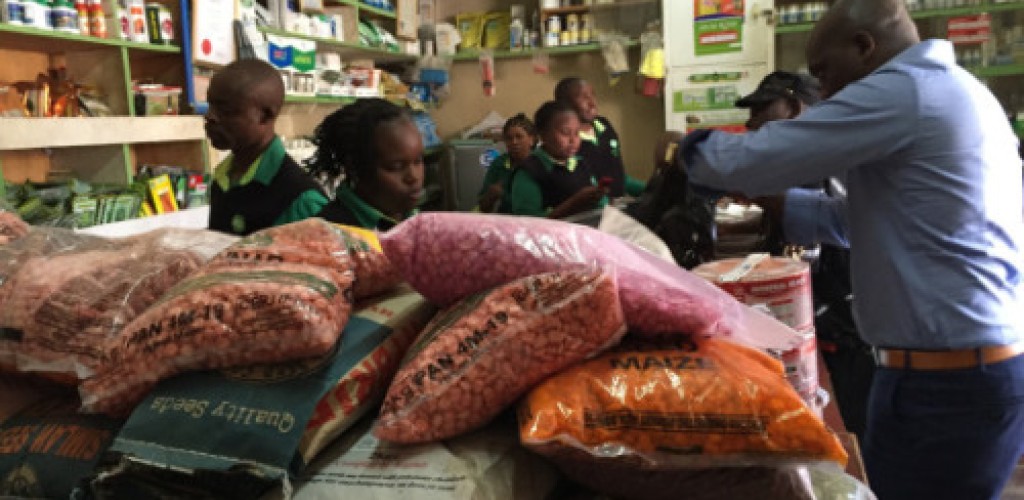
In some villages in Africa it’s easier to get Coca-Cola than the seeds local farmers need to thrive. It was that imbalance that first prompted Edward Mabaya, associate director of the Cornell International Institute for Food, Agriculture and Development (CIIFAD), to find ways to improve the availability of high-quality, locally adapted and affordable seeds for smallholder farmers in Sub-Saharan Africa.
In 2015, Mabaya launched The African Seed Access Index (TASAI) as a collaborative initiative between CIIFAD and Market Matters Inc., an independent non-profit. Access to improved seeds can make a crucial difference for farmers, Mabaya said, leading to higher yields, disease and pest resistance, climate change adaptation, and improved nutrition.
As principal investigator, Mabaya works with a team of advisors, country research teams and agricultural development partners to benefit smallholder farmers in Africa. Mabaya says the project monitors the development and competitiveness of national seed sectors in Africa, which have liberalized in recent decades and prompted more private seed enterprises to enter markets that had been state-owned monopolies. In Kenya, for example, Mabaya said that in 2000 there were only five registered seed companies in the entire country. Now there are more than 150.
The deregulation of the seed market has added new challenges for African countries
“There is a technology boom across Africa and yet less than 30 percent of farmers are planting seeds that have recently gone through a formal breeding process.” he said.
TASAI is exploring the root cause of these problems. The Index is sector specific, with indicators that are divided into five broad categories: research and development, industry competitiveness, seed and policy regulations, institutional support and service to smallholder farmers.
“We wanted to make sure the indicators were actionable. Simplicity, accuracy and transparency were our top criteria,” he said.
“There is also an effort to have new indicators for new countries. In some, climate change might play a role. In some others, it might be the price ratio between seed and grain,” he explained. The index has been successfully piloted in Kenya, Uganda, South Africa and Zimbabwe and is currently being rolled out to 12 countries.
Going forward, Mabaya wants to expand into more countries. “We have come a long way. The hope for the future is to reach other parts of the globe outside Africa, and continue to address the issues of seed access by smallholder farmers across the world,” he said.
Amruta Byatnal ’16 is a student writer for the College of Agriculture and Life Sciences.