Onthophagus Hecate
Male top view
Onthophagus Hecate
The male as pictured here has an overhanging horn-like projection that forms from the pronotum and extends over the head. The beetle is approximately 9mm in length.

- Europe origin
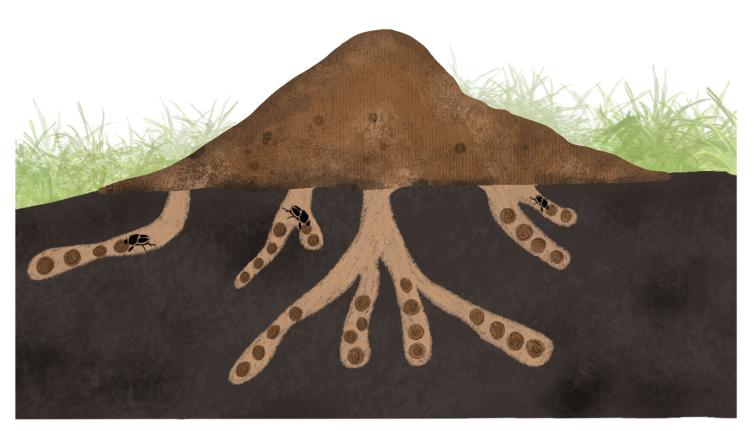
- Tunneling species (Paracoprid)
Size: 5.2–9.5 mm length; 1 to 2.5 mm wide
Identification: Dull black
Range: Occurs in North America East to about South Dakota
Overwinter Life Stage: Adult or Pupa
Generations per season: 3 to 4 generations
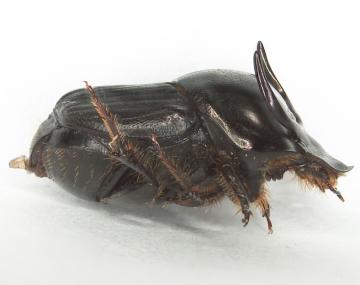
Male side view
Onthophagus hecate
The male as pictured here has an overhanging horn-like projection that forms from the pronotum and extends over the head. The beetle is approximately 9mm in length.

Female top view
Onthophagus hecate
This female lacks the large projection seen in males and is significantly smaller in size– approximately 6-8mm.

Tunnelers
Dung beetle species that "tunnel" lay their eggs in the brood balls they have constructed in tunnels below the pat.