Aphodius fimetarius and pedellus
Dung beetles
These two dung beetle species are difficult to tell apart without DNA analysis and are included here as a complex. A recent study in Canada found only Aphodius pedellus. As part of nature's cleanup crew, aphodius fimetarius and aphodius pedellus contribute to a healthier and more sustainable environment.
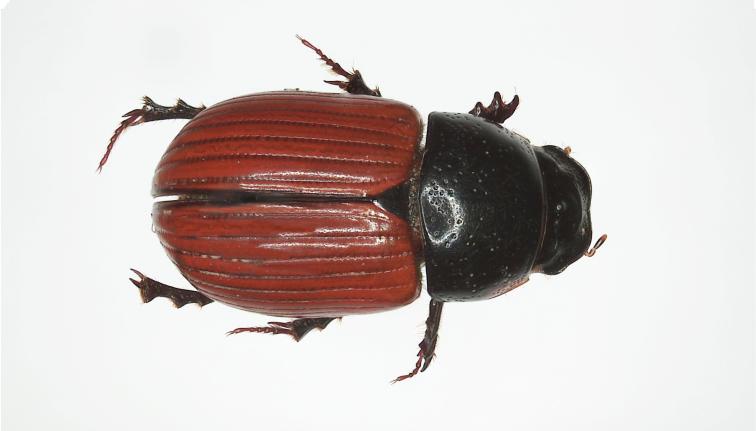
Aphodius fimetarius or pedellus
- European origin
- Dwelling species (endocoprids)
Size: 6.9 to 9.5 mm in length; 3.3 to 4.5 mm wide
Identification: The head and pronotum are black. The wing case (elytra) over the abdomen is darker red.
Range
Across North America and much of the world
Overwinter Life Stage
Adult, Eggs or larvae
Generations per season
Spring and late summer
Dwellers
Endocorpids
Dung beetle species that "dwell" lay their eggs in brood balls they have constructed in the the pat or just below the surface.
About Dung Beetles
Dung beetles are a beneficial part of the agricultural integrated pest management toolkit, helping to control unwanted pests, such as horn and face flies. These industrious insects play a crucial role in maintaining ecosystem balance by efficiently recycling dung, improving soil quality, and reducing the prevalence of harmful pests.
Dung Beetle Visual Guide Photo Credits
Photos and Illustrations by Hannah Tolz, Extension Support Specialist, Cornell IPM.
- Dung beetle lifestyle illustrations.
- Dung beetle photos: Aphodius fimetarius or pedellus, Colobopterus erraticus, Calamosternus granarius, Teuchestes fossor, Eupleurus subterraneus, Otophorus haemorrhoidalis, Alloblackburneus rubeolus, Acrossus rubripennisn Oscarinus rusicola, Labarrus pseudolividus (lividus), Onthophagus taurus male, Onthophagus taurus female, Onthophagus pennsylvanicus, Onthophagus hecate male, Onthophagus hecate female, Hister beetle with head tucked, Hister beetle with head visible, Sphaeridium beetle and Rove beetle.