

Fall 2026 Harry ’51 and Joshua ’49 Tsujimoto Perspectives in Global Development and the Environment Seminar Series
About the speaker
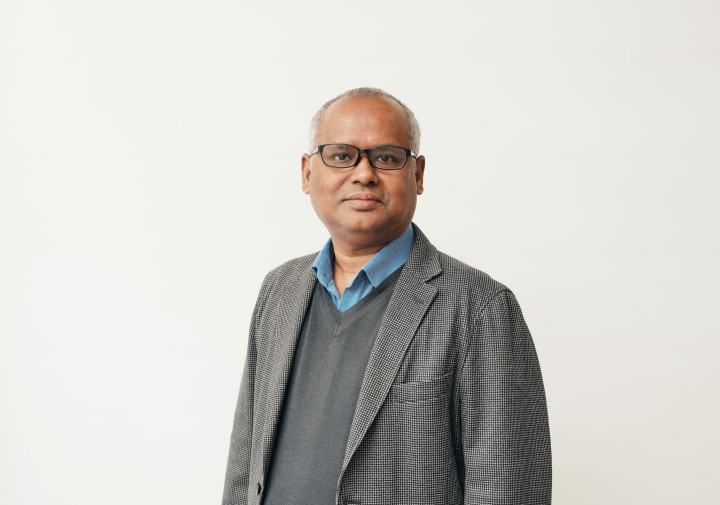
Mohammad Abdul Malek is Professor of Economics at Miyazaki International University, Japan. An applied agricultural and development economist, he uses randomized controlled trials, long-term household-panel data, and applied micro-econometric methods to study agricultural technology adoption, rural finance, poverty dynamics, and food-system transformation. He directs the Mahabub Hossain Household Panel Data, one of the longest-running household-panel studies in a developing-country setting, spanning Bangladesh from 1987 to 2023. He is also a Co-Investigator in the Japan Society for the Promotion of Science-supported Panel Data Center for Asia and Africa at Kyoto University, and collaborates with researchers at the University of Tokyo, BIDS, JICA, and the Asian Development Bank. His research has appeared in the American Journal of Agricultural Economics, World Bank Economic Review, Journal of Development Economics, Journal of Productivity Analysis, Asian Development Review, and Food Security. His co-authored SRI research with Barrett et al. received the 2022 American Journal of Agricultural Economics Outstanding Article Award. He serves as Associate Editor of the Australian Journal of Agricultural and Resource Economics, Executive Council Member of the Asian Society of Agricultural Economists, and Founding Representative Director of the Network of Bangladeshi Researchers in Japan.
His current research examines digital agriculture, machine-compatible SRI, machinery-rental service models, and interactions between credit and technology adoption in rice-based food systems.
Abstract
Why do productive, climate-relevant agricultural technologies fail to scale among smallholder farmers? This talk draws on 15 years of randomized experiments and implementation research on the System of Rice Intensification (SRI) in Bangladesh to examine the roles of training, peer learning, targeting, credit, mechanization, and service delivery. Repeated training and peer teaching can raise adoption, yields, and profits, but information alone does not ensure sustained use. Referral incentives can distort targeting, while machine access alone has generated limited uptake because mechanized SRI requires coordination among farmers, service providers, and institutions. I connect these findings to long-run household-panel evidence and a new research agenda on AI-enabled agricultural advisory, marketplace, and financial tools. The evidence suggests that scaling agricultural innovation requires systems that combine learning, finance, risk management, reliable services, and institutional coordination.
About the seminar series
The Harry ’51 & Joshua ’49 Tsujimoto Perspectives in Global Development and the Environment Seminar Series showcases innovative approaches to development with experts from around the globe. Each year, the series attracts online registrants from over 45 countries and more than 350 organizations.
Seminars are held Wednesdays from 12:20-1:10 p.m. Eastern time during the semester in 175 Warren Hall. Students, faculty and the general public are welcome to attend in-person or via Zoom.
The series is co-sponsored by the Sections of Global Development and Natural Resources and the Environment and the Charles H. Dyson School of Applied Economics and Management as part of courses GDEV 4961, AEM 4961, NTRES 4961, GDEV 6960, AEM 6960, and NTRES 6960.
Date & Time
September 23, 2026
12:20 pm - 1:10 pm
Location
More information about this event.
Contact Information
Mariah Doyle-Stephenson
- md2237 [at] cornell.edu
Speaker
Mohammad Abdul Malek
Departments
Global Development Section
Natural Resources and the Environment Section
Charles H. Dyson School of Applied Economics and Management
Ashley School of Global Development and the Environment
Related Events
Conference
Seminar

We openly share valuable knowledge.
Sign up for more insights, discoveries and solutions.