

Fall 2026 Harry ’51 and Joshua ’49 Tsujimoto Perspectives in Global Development and the Environment Seminar Series
About the speaker
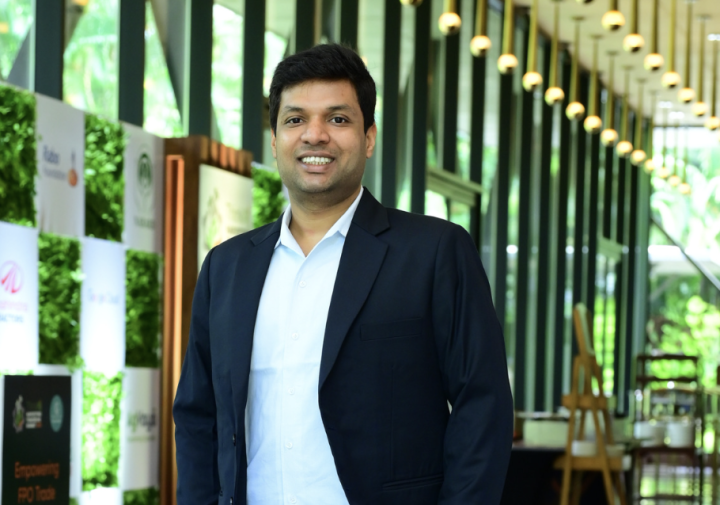
Nikhit Agrawal is a postdoctoral associate working on carbon and data governance in the Natural Resources and the Environment program at Cornell University. He completed his PhD in sociocultural anthropology at UCLA in March 2026. His research examines tech-entrepreneurial promises of scaling sustainability in contemporary agriculture. Agrawal’s work has been published or forthcoming in Economic Anthropology, Critique of Anthropology, Journal of Agrarian Change, Economic & Political Weekly, Scroll.in, The Wire, India in Transition, and The Indian Express. He has received grants from the Wenner-Gren Foundation, the UCLA International Institute and the Center for India and South Asia. His awards include the Robert B. Edgerton Endowed Award and the Eric R. Wolf Award from the Society for the Anthropology of Work, American Anthropological Association. He holds a BTech in Computer Science and Engineering from IIT Delhi and an MA in Sociology from the University of Delhi.
Abstract
Since 2015, when the Paris Agreement was adopted, agriculture has received increased prominence in global climate negotiations, both for its greenhouse gas emissions and its substantial untapped capacity to reduce them and enhance carbon storage and sequestration. Several corporations striving to meet emission reduction targets view agriculture as an area where reductions can be achieved in a cost-effective manner.
India, with more than 100 million agricultural landholdings, has become a significant focus of climate mitigation in the Global South. Over the past fifteen years, Indian agriculture, with its overwhelming share of smallholdings, has become an important site for technology companies, investors, and large agribusinesses seeking to build climate solutions. Understanding climate change at a planetary scale depends on data: historical weather records, climate models, and digital infrastructures. Once climate problems are understood at this scale, there is a strong push to find solutions that can also operate at scale. The common assumption is that small interventions are not enough; technology and finance are needed to transform agriculture on a much larger scale.
In this talk, I ask a simple question: what exactly are we scaling, and how, when we promote technology-driven, market-based climate solutions?
Carbon accounting turns very different places into comparable units of carbon credits. A rice field in Haryana in north India, for example, can be measured against an industrial emitter in Europe. But what happens to the people, work, and relationships that make this calculation possible?
Drawing on ethnographic research with an agriculture technology start-up that sought to marketize large-scale rice stubble-burning prevention across the two north Indian states of Punjab and Haryana and generate carbon credits by quantifying the mitigation of greenhouse gas reductions, I trace carbon accounting back to the fields where it begins. I show that the challenges of carbon projects are more than simply technological. They are also questions of whose labor, risks, and knowledge make these solutions possible.
While recognizing the affective force of scale-thinking — “Touching a million lives” is a common corporate mission statement — I argue that we need to develop climate solutions that remain accountable to the people and places from which those abstractions are made.
About the seminar series
The Harry ’51 & Joshua ’49 Tsujimoto Perspectives in Global Development and the Environment Seminar Series showcases innovative approaches to development with experts from around the globe. Each year, the series attracts online registrants from over 45 countries and more than 350 organizations.
Seminars are held Wednesdays from 12:20-1:10 p.m. Eastern time during the semester in 175 Warren Hall. Students, faculty and the general public are welcome to attend in-person or via Zoom.
The series is co-sponsored by the Sections of Global Development and Natural Resources and the Environment and the Charles H. Dyson School of Applied Economics and Management as part of courses GDEV 4961, AEM 4961, NTRES 4961, GDEV 6960, AEM 6960, and NTRES 6960.
Date & Time
November 4, 2026
12:20 pm - 1:10 pm
Location
More information about this event.
Contact Information
Mariah Doyle-Stephenson
- md2237 [at] cornell.edu
Speaker
Nikhit Agrawal
Departments
Global Development Section
Natural Resources and the Environment Section
Charles H. Dyson School of Applied Economics and Management
Ashley School of Global Development and the Environment
Related Events

Webinar
Poultry 101 Workshop
Workshop

We openly share valuable knowledge.
Sign up for more insights, discoveries and solutions.