Back

Discover CALS

See how our current work and research is bringing new thinking and new solutions to some of today's biggest challenges.

Share
  • IPM
  • Greenhouses
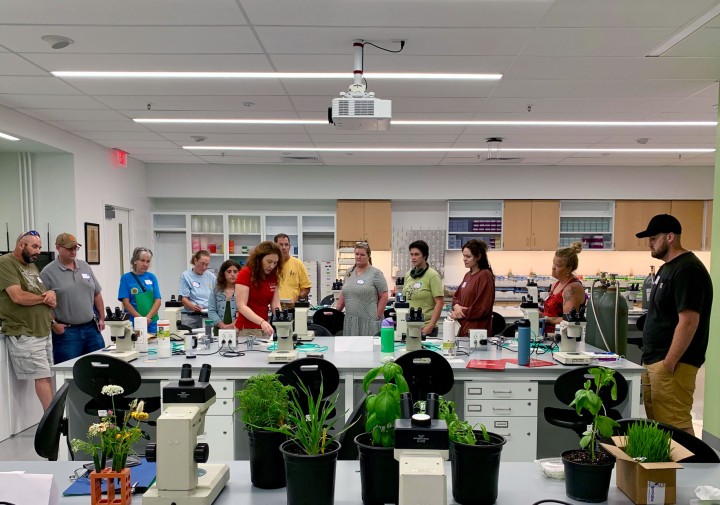
A group of eleven people stand in a semi-circle around a presenter who is gesturing to a plant specimen as she speaks.

Wondering how to apply fertilizer effectively? Have questions on beneficials? Always wanted to know more about plant diseases? This is the place for you.

This event was designed to give greenhouse growers hands-on practice with production factors that affect pest management. Topics included aspects of IPM through entomology, plant pathology, plant production and biocontrol.

Credits: 

  • DEC Credits: 3 credits in categories 10, 24, 25, 1a, 3a, 3c.

When: August 6 from 10:30 a.m.–4:30 p.m.

Location: Bradfield Hall, Cornell University, Ithaca, N.Y. 

Date & Time

August 6, 2025
10:30 am - 4:30 pm
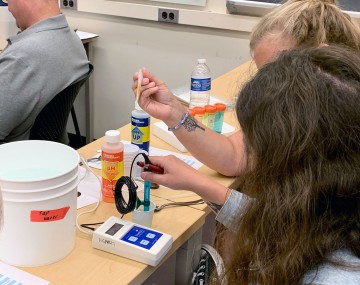
Two people hold electronic instruments in small cups of fertilizer mixture to measure PH and total dissolved solids, respectively.

Two participants adjust and test PH of tap water in one of Neil Mattson's sessions.
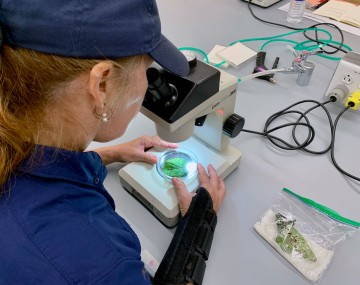
A person wearing a blue shirt and cap looks through a microscope at a disease-affected plant.

A participant inspects powdery mildew on a leaf through a microscope in one of Samantha Willden's sessions.
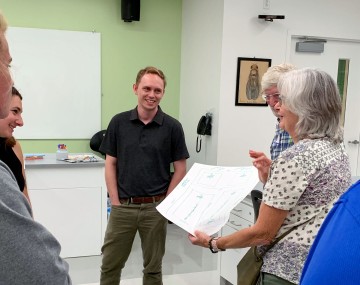
A group of 6 smiling people stand in a circle while one person holds their greenhouse map or diagram in the center of the circle, showing it to the group.

A participant explains their greenhouse diagram in one of Dominique Holtappels's sessions.
Speaker

Neil Mattson

Professor of Horticulture, Horticulture Section, School of Integrative Plant Sciences, Cornell University

Module topic: Fertilization preparation: Getting it right for healthy plants and environment

Speaker

Samantha Willden

Assistant Professor, Department of Entomology, Cornell University

Module topic: Biocontrol: Where, When and How


Speaker

Dominique Holtappels

Susan Eckert Lynch Assistant Professor, Plant Pathology and plant Microbiology Section, School of Integrative Plant Sciences, Cornell University

Module topic: Understanding plant disease: A hands-on exploration of the disease triangle

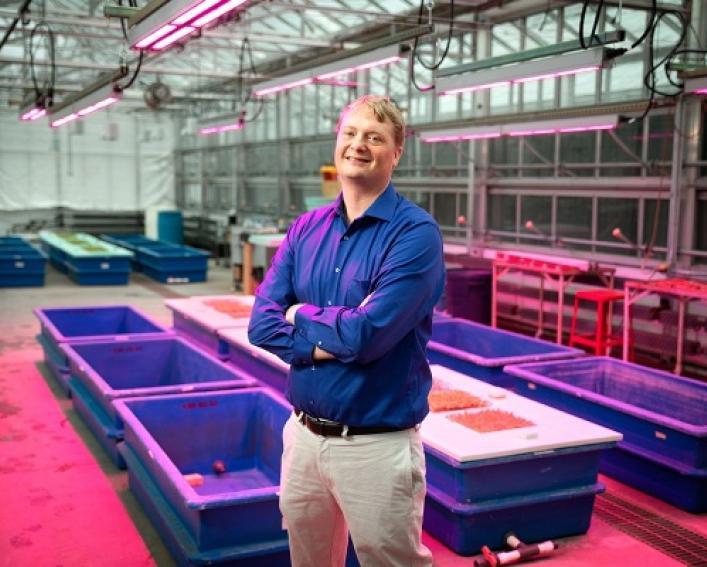
neil mattson in greenhouse with specialized lighting and hyrdoponic system
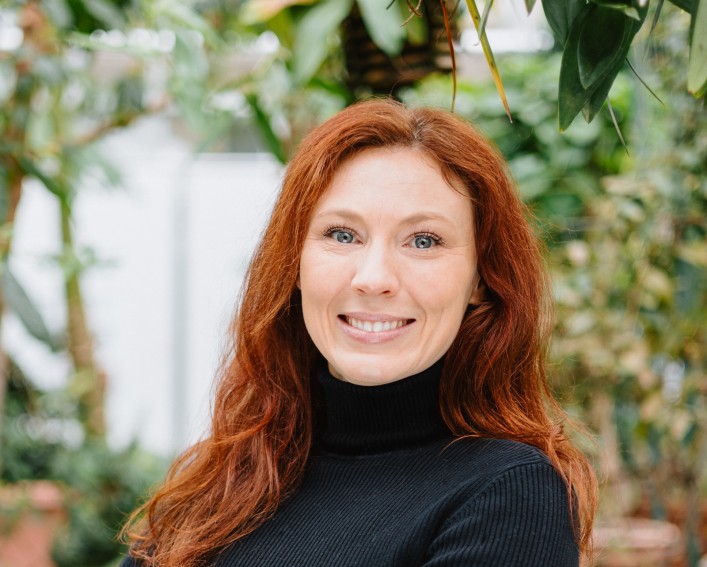
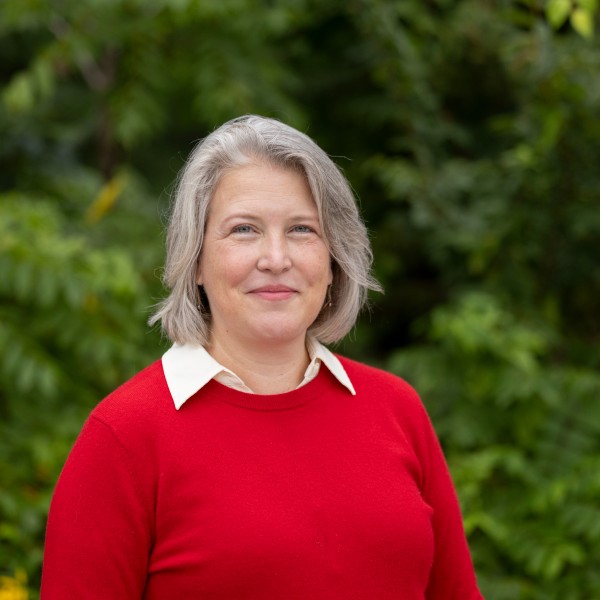
Samantha Willden portrait Headshot
Dominique Holtappels headshot
  • 10:30-11 a.m.: Registration
  • 11-11:15 a.m.: Intro
  • 11:15 a.m.-12:15 p.m.: The Doctor Is In
  • 12:15-12:50 p.m.: Lunch Break
  • 1-4:10 p.m.: Rotate through module topics
    Each module will be offered three times. Everyone will have an opportunity to attend all the modules.
    • 1-2 p.m.: First module
    • 2:05-3:05 p.m.: Second module
    • 3:10-4:10pm: Third module
  • 4:15-4:30 p.m.: Evaluation and wrap up

Module Descriptions

In this session, we'll examine plant problems from samples that participants and speakers bring in. We'll use microscopes and references to identify the issues, then discuss appropriate management techniques and effective pesticide options. All presenters will participate in this session.

Neil Mattson, Horticulture Section, School of Integrative Plant Sciences, Cornell University

Proper fertilization is a necessity for optimum plant growth as a basis for good pest management. When preparing fertilizers it’s important to understand several aspects to make sure your plants are getting what they need without excess application leading to higher insect populations and leaching to the environment. We’ll discuss solubility, compatibility, and determining what’s in your fertilizer. Through hands on exercises we’ll practice reading a fertilizer label, best practices for mixing, and determining what fertilizers are compatible with each other. We will also discuss the use of fertigation systems to deliver registered pesticides.

Samantha Willden, Entomology, Cornell University

Biological control of insect and mite pests is a key component of any successful Integrated Pest Management (IPM) program. However, incorporating biocontrol strategies on your farm often involves experimentation to find the right 'recipe' for success. In this workshop, we’ll identify common insect and mite pests, match them with effective biocontrol agents, and explore best practices for implementation. We'll also cover how to evaluate the effectiveness of your biocontrol program and outline steps for making adjustments when needed.

Dominique Holtappels, Plant Pathology and plant Microbiology Section, School of Integrative Plant Sciences, Cornell University

What drives the development of disease in plants? In this session, we will explore the key factors that contribute to plant disease, using the foundational concept of the disease triangle. We will examine how the environment influences pathogen behavior and disease outbreaks and learn to recognize the dynamic interactions between the host, the pathogen, and the environment. Through activities and real-world examples, this session will provide insights to better understand disease development.

More information about this event.

Contact Information

Elizabeth Lamb

Speaker

Neil Mattson, Ph.D.

Samantha Willden

Dominique Holtappels

Departments

Cornell Integrated Pest Management

School of Integrative Plant Science

Cornell AgriTech

Department of Entomology

Related Events