- PLSCI 3025/5025: Hydroponic Food Crop Production and Management
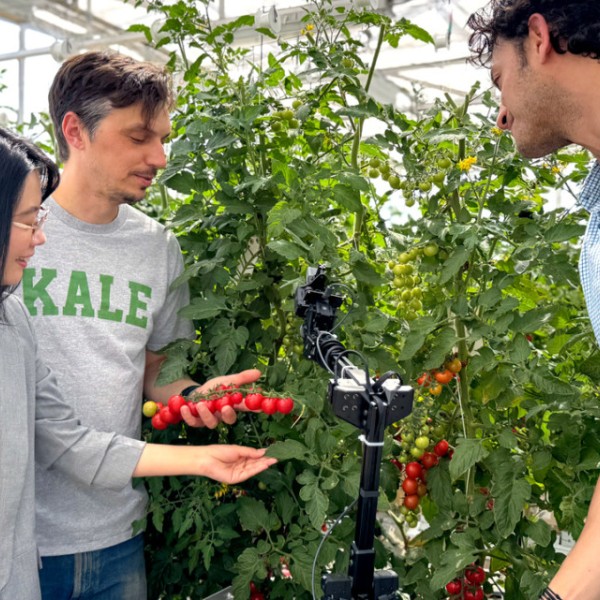
Through the class I teach every other year, PLSCI 3025 Hydroponic Food Production & Management, 4 cr., I have the opportunity to foster student learning of controlled environment agriculture crops and production systems. In lab, students have the hands-on opportunity to grow hydroponic herbs, leafy greens, tomatoes, and cucumbers. Concepts in environmental management our put to practice. Produce grown is donated to a community food shelf. Beginning in 2016 I had a 10% teaching appointment. Prior to that time, I did not have have a formal teaching appointment at Cornell. I enjoy giving several guest lectures every year related to topics relevant to my research and extension interests, such as: the floriculture industry and production techniques, plant mineral nutrition, containerized plant production, soilless substrates, organic fertilizers, monitoring root-zone pH and salts.
Outreach and Extension Focus
My extension efforts are directed at commercial producers of greenhouse crops. In New York this industry is primarily greenhouse growers of herbaceous material sold as potted plants or spring bedding plants. The New York State greenhouse industry is comprised of about 770 operations in >600 acres of greenhouse space producing flowers and vegetables with a wholesale farm gate value of more than $200 million annually.
The central goal of my greenhouse extension program is to deliver research-based information pertinent to greenhouse producers to help them make sound management decisions. My focus on greenhouse sustainability really comprises two different aspects. First and foremost greenhouse producers view sustainability as survivability. High input costs and declining crop margins have plagued the floriculture industry for the past decade. Presentations, outreach materials, and applied research have focused on methods to reduce production costs (heating costs, fertilizer inputs, and reducing crop shrinkage) as well as improving plant quality and shelf-life to increase crop value.
The second area I have focused on is reducing fertilizer inputs and developing strategies to reduce run-off to the environment. This area is a concern, particularly in Long Island where half of NYS’s floriculture industry is centered.