

Search for News & Stories

News
News
Three Cornell scientists were honored during a June 1 ceremony promoting women’s engagement in innovation and commercialization – part of Cornell’s efforts to elevate women inventors, who were awarded just 12.8% of all U.S. patents in 2019.

Report

Report

News
Farmers can tailor their efforts to control weeds more effectively by pinpointing when a particular weed will emerge, according to a new Cornell study.
News
Social justice and engineering blend beautifully. Last semester, Cornell students built a trailblazing food-sharing pantry to take an edge off chronic hunger among local residents.

Field Note

News

Field Note
Field Note

News
The National Science Foundation has awarded Cornell $2 million to oversee the first federally funded midterm election survey in 20 years, engaging multiple partners and diverse methodologies.

News
Benjamin Z. Houlton, the Ronald P. Lynch Dean of the College of Agriculture and Life Sciences, testified June 15 to the U.S. House Agriculture Committee on the role of climate research in supporting agricultural resiliency.

News
As the pandemic pomp and COVID circumstances dissipate, Cornell’s McGovern Center and Praxis Center incubators graduated five startups, putting them on the road to success.

News
Applications are being accepted through Aug. 1 for the inaugural New York Concord Grape Innovation Award, a first-of-its-kind business competition aimed at stimulating innovation and development of new products and markets for one of New York’s...
News
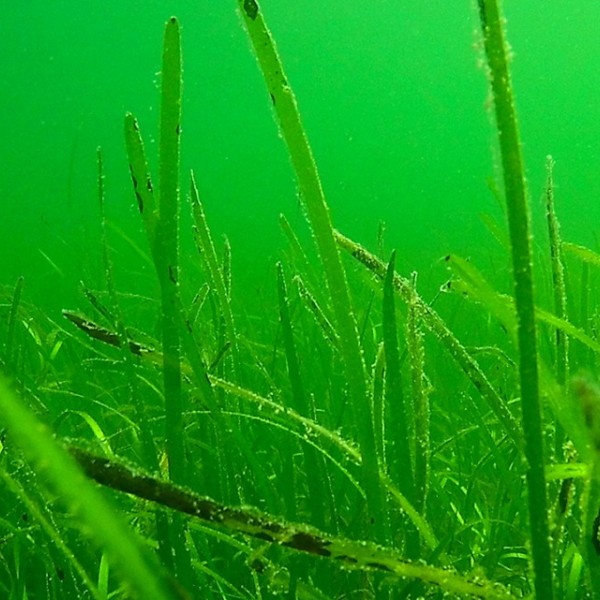
A combination of ecological field methods and AI has helped an interdisciplinary research group detect eelgrass wasting disease from San Diego to southern Alaska, and determine that it’s caused by warmer-than-normal water temperatures.
Field Note
For the past four years, the Chobani Scholars Program has supported students from dairy farming backgrounds who are pursuing careers in dairy. This year, with its new focus on supporting historically underserved students who have a broad set of...

News
The exhibition, “Extinct and Endangered,” opens June 22 in New York City and is based on the macrophotography of renowned artist Levon Biss.

News

News

We openly share valuable knowledge. Often through email.
Sign up for more insights, discoveries and solutions.