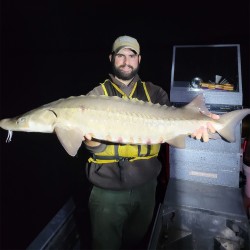
I have always been one to care for our environment, more specifically, our aquatic environments. My first fishing trip to our local creek sparked my environmental interests. Since that day my goal in life was to work towards a career centered around fish.
To achieve this goal, I immersed myself in an environmentally focused education at SUNY College of Environmental Science and Forestry (SUNY ESF), where I graduated with a Bachelor of Science degree in aquatic and fisheries science. Following the completion of my undergraduate education, I began working as a lead fisheries technician on the SUNY ESF Onondaga Lake Biomonitoring Project. This project led me to continue my education at SUNY ESF pursuing a Master of Science degree in Fish and Wildlife Biology and Management under the advisement of Dr. Joshua Drew. During my graduate education I was a research assistant on the Onondaga Lake Biomonitoring Project and the Brook Trout Restoration Project.
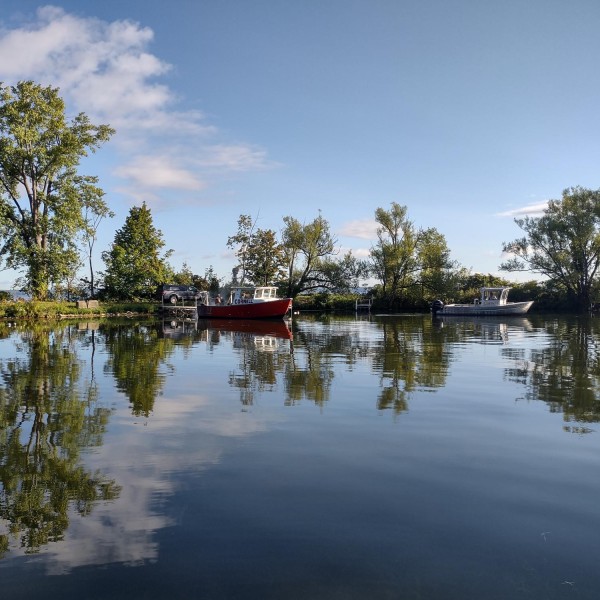
I recently joined the warm water crew at the Cornell Biological Field Station at Shackleton Point as a fisheries technician. I am excited to participate in the important research Cornell is conducting on Oneida Lake.
Recent Research
The research I conducted during my graduate education included lake and stream fish community monitoring. From 2021 to 2023 I was one of two lead fisheries technicians on the Onondaga Lake Biomonitoring Project. The project began under the advisement of Dr. Neil Ringler, monitoring the fish community, fish tissue mercury content, and water quality of the historically polluted Onondaga Lake. Our sampling methods included gill, fyke, and seine netting to continue the long-term monitoring of Onondaga Lake’s fish community.
My research focus shifted to stream fish later in my education to assist in the assessment of the land returned to the Onondaga Nation. Headed by the SUNY ESF Center for the Native Peoples and the Environment, the Brook Trout Restoration Project was created to assess the status of brook trout in the headwaters of Onondaga Creek. The research consisted of fish community monitoring via backpack electrofishing, aquatic macroinvertebrate community monitoring, and water quality monitoring.