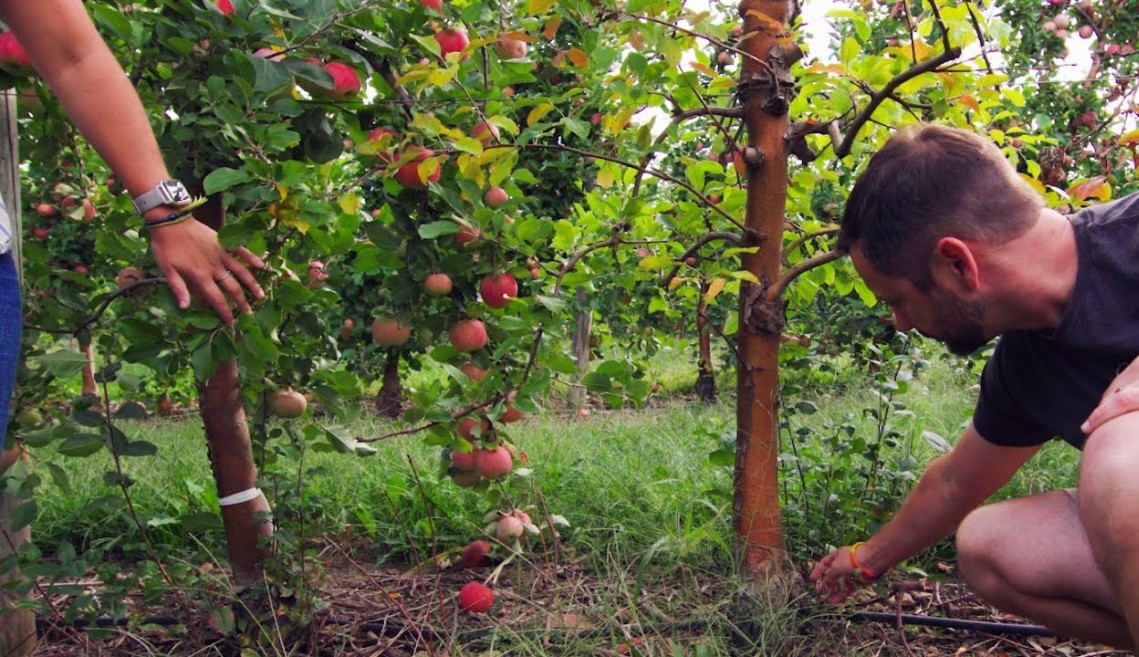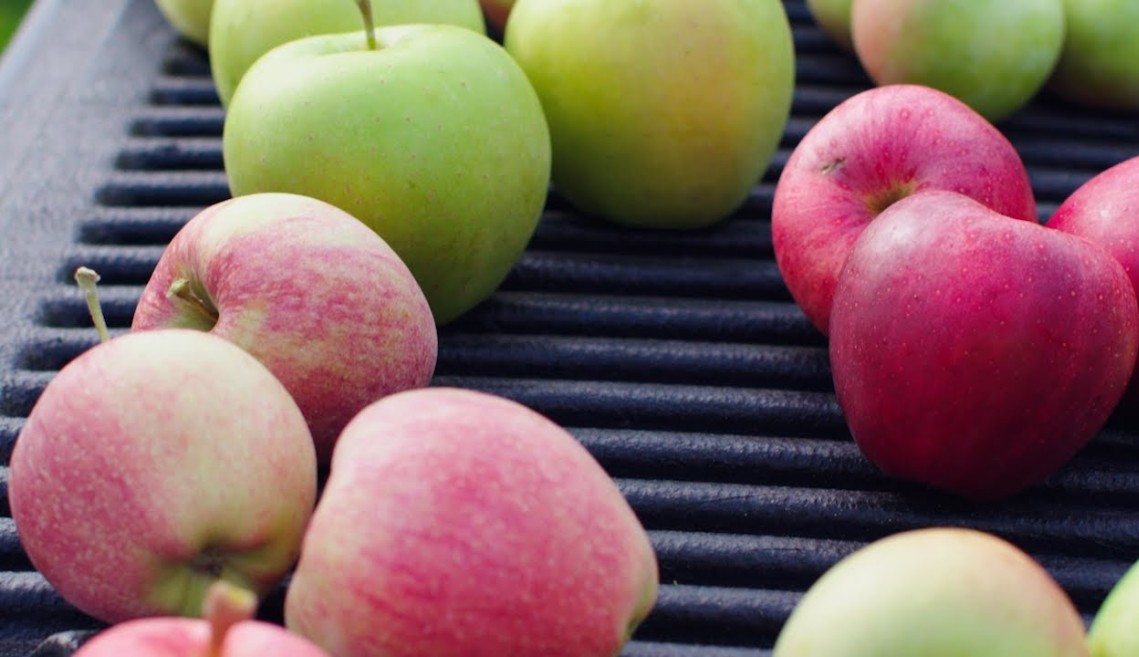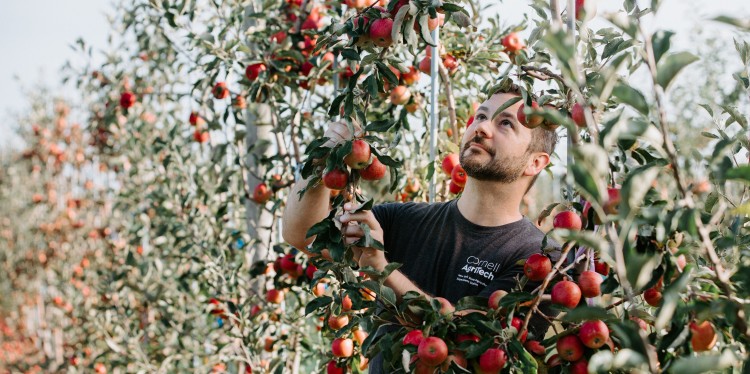
As unpredictable weather continues to disrupt growing seasons, associate professor of horticulture Jason Londo is uncovering its deepening impact on apple orchards — from long-term tree decline to subtle changes in fruit finish that influence how apples look, taste, and sell. This feature highlight's Londo’s research insights on how shifting weather patterns are reshaping orchard health and fruit quality across New York state.
Extreme weather contributes to tree decline
Londo's research explores how climate change is accelerating apple tree decline, with a focus on the physiological stress caused by increasingly erratic winter weather. Working in orchards with popular varieties like Gala and Fuji, Londo studies how apple trees — which are clonal, long-lived perennials — respond to seasonal instability. His research reveals that sudden temperature shifts in winter can trigger premature awakening in trees, leaving them vulnerable to freeze damage. These injuries, though small at first, accumulate over time and contribute to long-term tree decline. By examining how winter stress affects summer growth and fruit quality, Londo aims to better understand the resilience of apple trees and inform strategies to protect apple production in a changing climate.