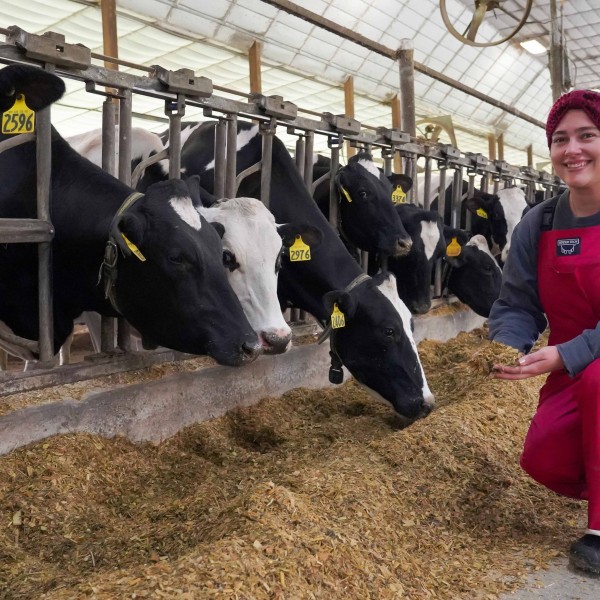
Our undergraduate biological/agricultural engineering program jumped three spots in the latest U.S. News & World Report ranking, moving up to No. 4 in the country.
John March, professor and chair of the Department of Biological and Environmental Engineering (BEE), said access to innovative teaching from world-class faculty and expanded research opportunities have combined to make the department a premiere destination for undergraduate students. The department, with 15 faculty members, focuses on generating solutions to critical societal problems involving water, food, energy and public health.
March said a new curriculum rolled out in 2015, while more academically challenging, has been enthusiastically received. The changes – students must now complete seven required core department courses and can choose from seven elective course focus areas – were designed to provide more choices for career opportunities and specialization.
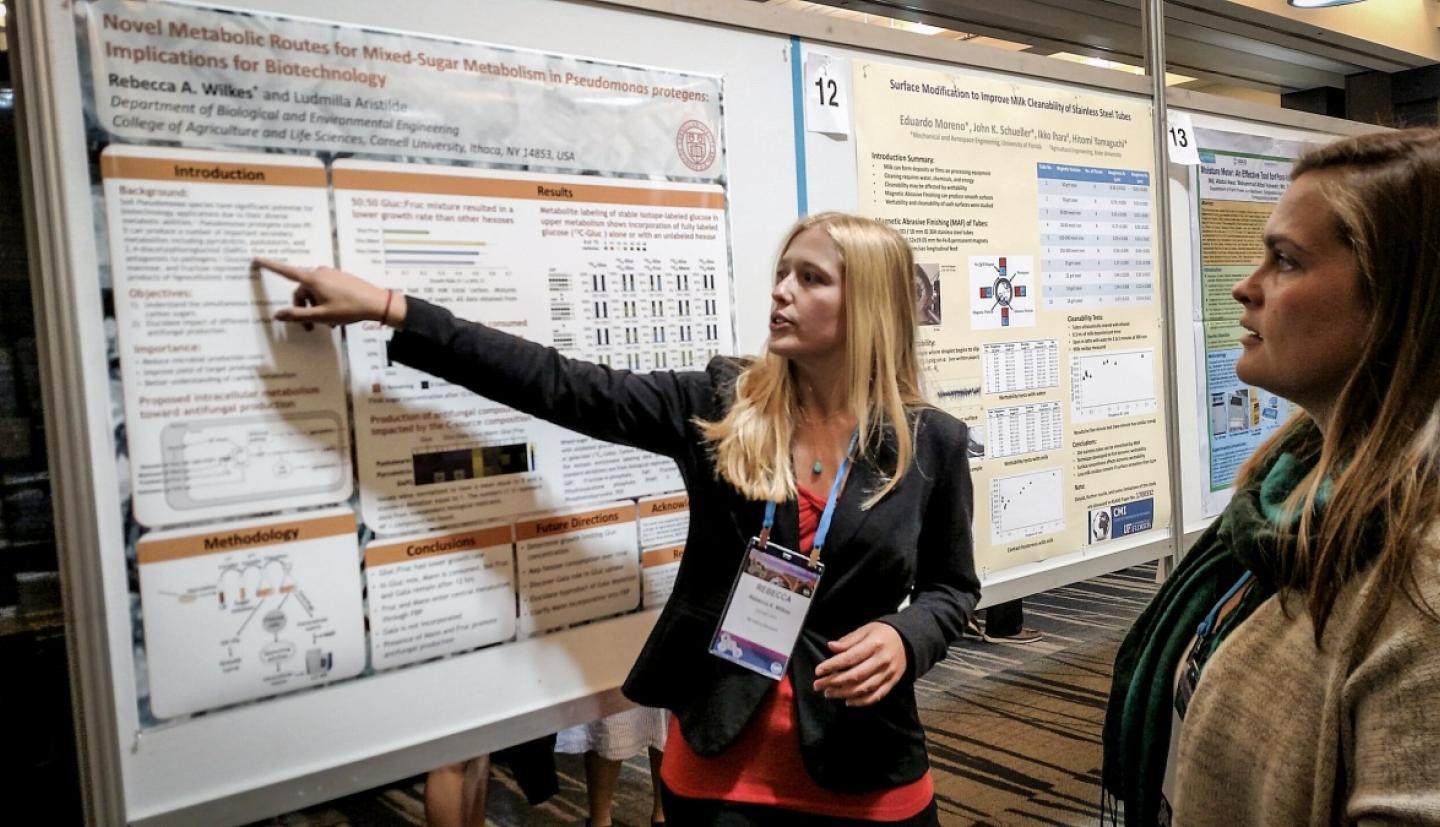
In July, the department sent students and faculty to the American Society of Agricultural and Biological Engineers annual international meeting. Eleven CALS students traveled to the meeting in Spokane, Wash., providing a venue for students to present research and discuss projects with experts from around the world.
“We are taking a leadership role internationally in modeling complex systems both in the environment and in energy,” March said. “Those efforts are really starting to pay off.”
Additionally, March said new faculty members are bringing innovative ideas as the department leverages its broad expertise to design and develop solutions to biological and environmental problems.
“We have now more collaboration across the department than we ever have before,” March said. “We have faculty with expertise in soil and water working with people in nano-biotechnology. As human populations continue to expand, solutions are needed for severe and growing environmental challenges, and we are positioned to make a real difference.”
The undergraduate program is not the only one to see a rise in rankings: In the spring, the graduate program moved up two spots in the U.S. News & World Report. The program is also ranked No. 4 in the nation.