periodiCALS, Vol. 7, Issue 1, 2017
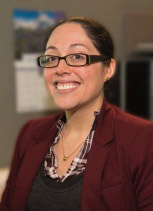
In December 2016, Rosa Méndez ’05 was appointed director of the Office of Environmental Justice with the New York State Department of Environmental Conservation (DEC), a position responsible for promoting and providing cleaner water, flood protection, cleaner air, habitat, and recreation spaces in communities across the state. Méndez, a New York City native who holds a degree in natural resources from Cornell and a Juris Doctor from Vermont Law School, shared her perspective on the job that lies ahead for her and why environmental justice should matter to everyone.
What are the biggest challenges in giving New Yorkers a voice in environmental and climate decisions?
Addressing environmental and climate concerns is critical for all of New York’s communities for future planning and decision-making. One of the biggest challenges is recognizing and mobilizing all of a community’s assets. There is much untapped leadership and local knowledge in our communities that should inform those plans and decisions. Another challenge is recognizing that environmental and climate concerns are not just about and will not be solved by environmental decision-making. Education, transportation, food security, and health are challenges and part of the solution. We need an interdisciplinary approach to ensuring that all communities are equipped to address environmental and climate risks.
Minority and low-income communities often experience a disproportionate share of the adverse impacts of pollution and other environmental hazards. How will you ensure fair treatment in environmental policies and permitting decisions?
Agency-wide efforts to promote environmental justice include ensuring meaningful involvement in decision-making through enhanced public participation. The Office of Environmental Justice assists the DEC divisions with outreach and education initiatives, providing guidance in the development of enhanced public participation plans for permitting decisions. Also, our Indian Nations Affairs coordinator aids DEC in consulting and cooperating with Indian Nations on environmental and cultural concerns. We will also focus on directly improving the environment in communities and increasing access to green and recreation space. Our Community Impact Grants provide funding for projects addressing environmental and public health concerns in low-income and minority communities that are experiencing historic burdens of environmental problems. Our office also includes a green infrastructure coordinator who collects and provides information on green infrastructure resources, projects, and funding sources to share with our network of stakeholders.
What prepared you to succeed as an advocate?
Both of my parents are community advocates, and I learned a lot from their examples. My coursework at CALS provided a background in resource management and policy and equipped me to better advocate for the environment. However, it was the students I met from all over the world that really prepared me to be an advocate. The most meaningful education came from listening to my classmates’ personal histories and discussing policy from their perspective.
What can individuals do to promote environmental justice?
One of the principles of environmental justice is meaningful involvement. But what does that mean or look like? I have experienced many instances where well-meaning advocates pushed an agenda, but residents living in the affected community actually wanted a different result. Listening is one thing individuals can do. Another is to take stock of all the benefits in your community. If a community has food, electricity, and sanitation that means it also has landfills, power generators, and trucks in someone’s backyard. We all need to bear burdens equally for the benefits we expect and must work together to achieve more efficient and sustainable means to receive those benefits.