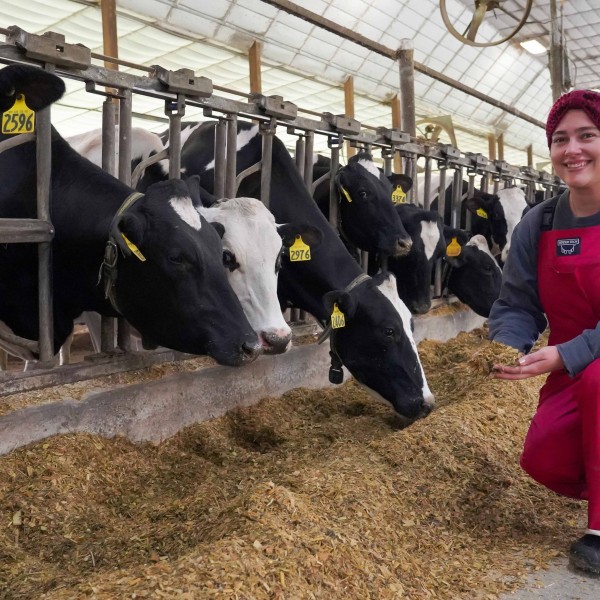
This summer marks the 50th Anniversary of the Shoals Marine Laboratory (SML)! SML is extremely excited and proud to be celebrating a half-century of marine science education and research on Appledore Island. What began as a single marine science course on Star Island in the summer of 1966 led by Dr. John Kingsbury has grown into a world-class marine laboratory that attracts students and renowned scientists from around the globe. Thousands of students, hundreds of faculty, hundreds of staff members, and an engaged community of supporters have led us to this Golden Anniversary year.
As SML’s Executive Director in this 50th year, I find it notable that one of the original reasons for the founding of SML remains important and even more relevant today: the decline of natural history in undergraduate education. Natural history focuses on organisms — their identity and relationships, where they live, and how they interact with the environment and each other. In the 1950s, courses in natural history were requirements for biology students; today, most programs have dropped both the requirements and the courses [1]. Natural history information in introductory biology textbooks is down 40% since SML opened its doors[2]. Funding for research and publications related to natural history is also decreasing significantly.
Why does this matter?
A recent survey of Californian environmental scientists found that over 90% of them felt natural history knowledge was “essential” to success in their field and yet over half felt they lacked the training[3]. Over 80% of these scientists want more training in natural history[4]. I think SML Alumni and award-winning science writer Jennifer Frazer put our current problem into nice plain language: “the people society depends on to know the most about life — people with college biology degrees — in nearly all cases have no obligation to learn anything about actual living organisms[5]. Frazer goes further to point out that immersive, detailed study of the natural world is critical to advancing higher-level biological theories, as evidenced by of a long list of eminent biologists, not the least of which include Charles Darwin, Alfred Wallace, Rachel Carson and E.O. Wilson[6]. Natural history is a critical component of training of tomorrow’s scientists for success.
At SML, we agree that a strong foundation in natural history is critical to the future of the biological sciences. Appledore Island and its surrounding ocean is SML’s home, classroom, and primarily teaching tool. Students have the rare opportunity to explore, all day, the rich natural history that surrounds them. Our students can choose from over 15 immersive colleges courses offered from May through August on such topics as Sustainable Fisheries to Marine Invertebrate Biology. They earn the same amount of credit in two weeks as they would in a semester-long course back on campus! This immersion in natural history, coupled with 21st century technology and world-class scientists lead many students to a life-changing experience and a path to a career in science. For others, their time at SML opens their mind to a larger world and a sense of stewardship and appreciation for the land, ocean, and their diverse and fascinating creatures.
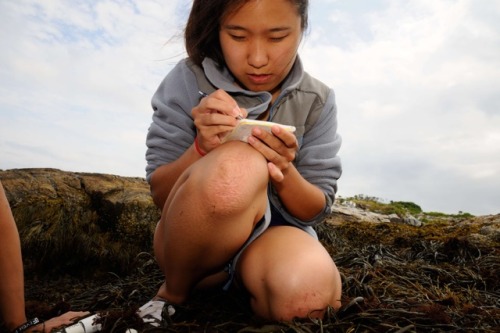
Undergraduate research internships are another major activity at SML. Our ~20 interns focus for 2 to 10 weeks on seabird ecology, marine mammal biology, rocky intertidal community ecology, sustainable engineering, and more. Student interns work directly with university faculty and SML scientists to conduct experiments and research projects, many of which build long-term datasets to help us understand how changing populations reflect changing environments. Internships provide invaluable experience, technical skills and opportunities for critical thinking and creativity, all of which enhance future education and careers. For budding scientists, nothing equals the chance to engage in your studies as you watch changing weather, observe behavior, and enjoy the excitement of discovery first hand — the stuff of natural history-based research and education.
Here at Shoals Marine Laboratory, we are dedicated to the pursuit and promotion of natural history-based education to ensure that tomorrow’s scientists and citizens are ready to face our rapidly changing world and build a sustainable future. It’s working!
Jennifer Seavey is the Executive Director of Shoals Marine Laboratory on Appledore Island, Maine which is a joint facility of the University of New Hampshire and Cornell University.
[1] BioScience •2014. 64(4): 300- 310.
[2] ibid
[3] BioScience 2016. 66 (7): 592-599.
[4] ibid
[5]http://blogs.scientificamerican.com/artful-amoeba/natural-history-is-dying-and-we-are-all-the-losers/
[6]http://blogs.scientificamerican.com/artful-amoeba/80-percent-of-young-environmental-scientists-could-use-more-natural-history-training/