

Drew Margolin, a professor of communication at Cornell University who studies human dynamics through social media, isn’t just tracking how the electorate is reacting to candidates in one single moment via Twitter, but how they have been reacting since the beginning of the primaries. This historical data gives Drew and his collaborator Yu-Ru Lin, University of Pittsburgh, a unique window into changing sentiment within a party about candidates and topics, as well as across party affiliations.
For example, how are early Trump or Hillary supporters reacting differently from more general Republicans and Democrats who originally favored another candidate? What about those who may have been #NeverTrump or #NeverHillary? And what does it mean for Election 2016?
Margolin will be dissecting the data from these randomly selected computational focus groups during both National Conventions, the Presidential Debates, and the National Election.
Coverage of the first and second nights, the make up of their computational focus groups, and general thoughts on using Twitter as a sentiment barometer can be found here. Coverage of Ted Cruz’s non-endorsement during the third night can be found here.
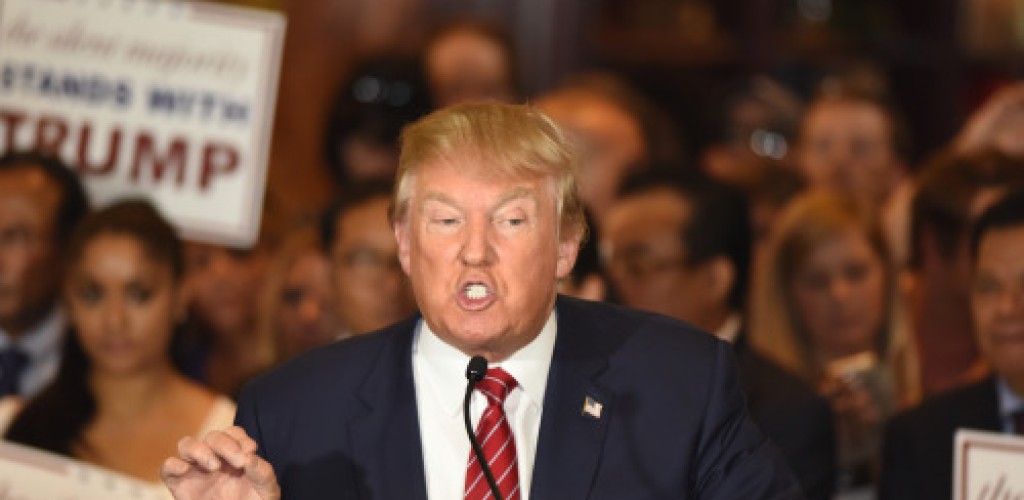
Analysis of the fourth and final night, including Trump’s acceptance speech below …
Republican National Convention: Final Night
The Speech
How did Trump do in his speech? This is something that Twitter is particularly useful for measuring because we can compare the tweets sent by our groups before Trump’s speech to those during and after it. This is something that surveys don’t do well, since they can’t interrupt the speech to ask people how they feel.
To keep things simple I count “Trump’s speech” from the time Ivanka came out, since in a way her speech is a part of his specific pitch, and this let’s us see how that was received as well.
The first thing we see is that, unsurprisingly, people were paying attention. Twitter activity increased in all of our groups, and Trump increased his share of attention substantially in each group, usually by 75-150%. The one slight exception is Trump Dumpers, who were already talking about Trump a lot (17% of tweets) and only bumped up to 19% when his speech began. The general Candidate Avoiders and the Trump Avoiders both ramped up attention a lot, doubling or more their mentions of Trump once the speech begins.
The second thing we see is that everyone liked Ivanka. She got mentioned in 4-8% of the group’s tweets after she came out–much more than Pence, Giuliani, Ryan, Christie etc. on the previous nights, and more than Melania–and 3 out of the 4 groups tended to use substantially more positive language when talking about her (similar to Melania). The one exception was the Trump Avoiders, who showed no particular emotional tendency for Ivanka.
So that sounds like good news for Trump. People were paying attention, and they liked his lead-in. But what comes next is not as encouraging. During and after his speech, Trump himself drew relatively positive language from only one group–Trump Defectors–the people who dropped their original GOP candidate and now follow Trump. These are, presumably, the people who already plan to vote for him. The other groups contain those who are resistant to him or may not have made up their mind, and none of them showed a tendency to talk about Trump in relatively positive terms during or after his speech.
The speech did appear to help Trump in one way. It seemed to eliminate the effect of Cruz’s non-endorsement, at least for the time being. From the beginning of the convention until Cruz’s speech last night, the Trump Dumpers had talked about Trump in relatively neutral, sometimes positive terms. During and after Cruz’s speech last night, however, their tone became negative toward Trump (and positive toward Cruz). That pattern actually carried over to tonight. Before Trump’s speech, Trump Dumpers were still using relatively negative language about Trump and positive language about Cruz, who still held a lot of attention with 9% of their tweets–as many as Hillary and more than any other person but Trump. Trump’s speech appears to have neutralized this a bit. During and after his speech, Trump Dumpers didn’t show relative positivity or negativity toward Trump, and they stopped talking about Cruz.
But Trump’s goal with the convention, and his speech in particular, is not just to neutralize a resistance movement, it’s to generate more positive feeling toward him among all groups: those who love him, those on the fence, and those who are skeptical. Here there is no evidence that Trump’s speech was a success. As mentioned above, the Trump Dumpers, Candidate Avoiders, and Trump Avoiders all used, on average, relatively neutral language about Trump during and after his speech. The Trump Defectors did use relatively positive language, but it was no more positive than they had been using each night. So it’s not clear that he gained. His attacks on Hillary also didn’t seem to change much of the existing, largely negative, pattern of tweeting about her in our groups.
What went wrong? A few clues from the text of the tweets:
- The most tweeted short phrase by both the Trump Dumpers and the Trump Avoiderswas Trump’s declaration in his speech that “I alone can fix it.” Members of both of these groups did not like this phrase, calling it the words of a "dictator” and accusing it of being against conservative ideals/philosophy.
- The second most tweeted short phrase by the Trump Dumpers was a form of “Ivanka is not a Republican,” though the other groups did not seem to care as much about this.
- The Trump Defectors, those that support Trump–did not seem to pick anything out of his speech. Rather, they continued to engage with him on Twitter–retweeting him and replying to him. He has these voters, anyway, but this suggests they weren’t particularly inspired by his speech, either.
Of course, these phrases are tweeted in a small fraction of the tweets sent by each group. So it would be wrong to infer that most, or even many, group members noticed these things and were distressed. What these results point to, though, is the lack of anything compelling to quote in Trump’s speech. The one phrase that was pulled out was attacked.
The Convention in General
The fact that we collect data in the same way every night also allows us to measure the overall impact of the convention. Here the news is consistent with what we saw for the speeches. Within Republicans, the convention did not seem to add extra enthusiasm or positive emotion. On Night 1, the Trump Defectors were relatively positive for Trump and the rest of the groups were neutral. During and after Trump’s speech tonight, the Trump Defectors were relatively positive for Trump to almost the exact same magnitude and the rest of the groups were neutral.
This suggests that, with Republicans at least, Trump should not expect much of a convention “bounce.” It’s possible he would still get one from Independents or maybe even Democrats who, by design, are not in our sample. But from Republicans, this analysis suggests there will be no bounce. At this point, we can say that there is no evidence from Twitter that the convention “unified” the Republican Party or gave Trump momentum.
Next week, the Democratic National Convention …
- Drew
For media interviews contact:
Kathleen Corcoran
Office: 202-434-8036
Cell: 607-882-3782
kmc327 [at] cornell.edu


