

Drew Margolin, a professor of communication at Cornell University who studies human dynamics through social media, isn’t just tracking how the electorate is reacting to candidates in one single moment via Twitter, but how they have been reacting since the beginning of the primaries. This historical data gives Drew and his collaborator Yu-Ru Lin, University of Pittsburgh, a unique window into changing sentiment within a party about candidates and topics, as well as across party affiliations.
For example, how are early Trump or Hillary supporters reacting differently from more general Republicans and Democrats who originally favored another candidate? What about those who may have been #NeverTrump or #NeverHillary? And what does it mean for Election 2016?
Margolin will be dissecting the data from these randomly selected computational focus groups during both National Conventions, the Presidential Debates, and the National Election.
Coverage of the first and second nights, the make up of their computational focus groups, and general thoughts on using Twitter as a sentiment barometer can be found in yesterday’s post.
Republican National Convention: Night 3
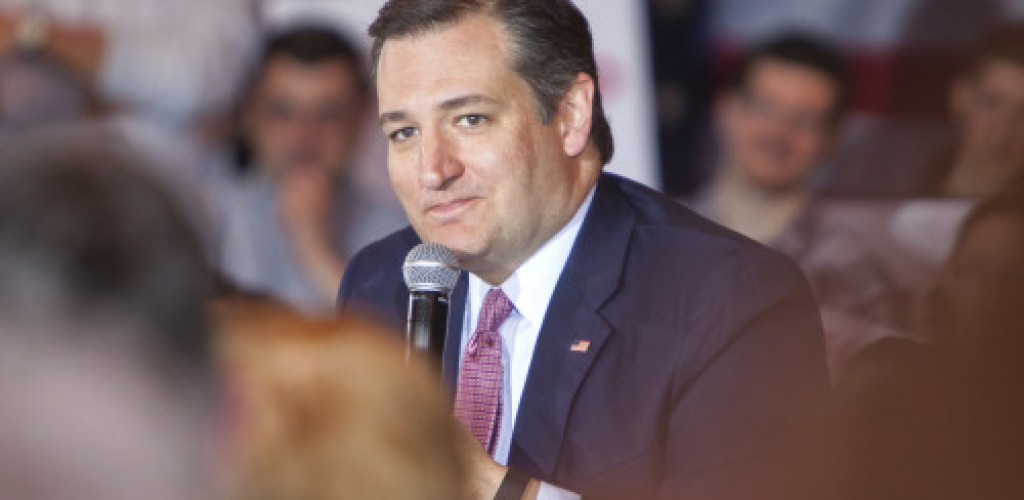
So it was a pretty normal night, and then Ted Cruz went and made a mess of it.
I expect that the media coverage will focus on Cruz’s non-endorsement of Trump, and in this case, they would be right to do so. The evidence from our computational focus groups is that this was, by far, the event of the night and of the convention so far.
The tendency through the first two nights, and for most of the third, has been that only Trump and Hillary get any real attention from our Tweeters. Other than Melania, who was mentioned in 3-4% of tweets by a couple of groups, no speaker has gotten over 2% mentions. Giuliani, Christie, Ryan, Carson, Tiffany Trump–groups had them between 1-2% or less. Trump usually got about 10-12% attention, with Hillary in the 4-10% range.
Last night, Ted Cruz was mentioned in more than 20% of the tweets we collected. Keep in mind, these are not just tweets to #RNCinCLE. These are any tweets sent by people we identified through the candidates they followed. Last night many of them were about the WWE. Tonight, Ted Cruz dominated their attention. Trump also got more mentions, close to 20%. So he and Cruz were on par. But this is, by any measure, quantified “show-stealing.” Before last night, Trump had much more attention than everyone else.
What does it mean? There’s two ways to analyze this.
1. What do the reactions of our groups tell us about how people are really feeling? A key group to watch is the Trump Avoiders–people who have switched their loyalties within different GOP candidates but have not yet adopted Trump. We look at whether they react more like Trump Dumpers–people who used to follow Trump but now follow other GOP candidates–or Trump Defectors–people who switched over to Trump from another candidate.
As we’d expect, the Trump Dumpers and Trump Defectors reacted in opposite ways. Trump Defectors used more positive language when tweeting about Trump and they used more negative language when tweeting about Cruz. Conversely, Trump Dumpers used more positive language when tweeting about Cruz and more negative language when tweeting about Trump. Interestingly, we see that the Trump Avoiders aligned with the Dumpers. Though not as strong as the Dumpers, they also used relatively more positive language in tweets about Cruz (their tweets about Trump were relatively neutral).
This is bad for Trump. It suggests that the Avoiders–the ones he has to persuade to come on board–are not so close to being convinced. Tonight they also hit a new high for use of #NeverTrump, close to 2%, which is where the Trump Dumpers are consistently. Though much more analysis would have to be done, my gut sense is that Cruz enabled them to express their true feelings. I also note that both the Dumpers and the Avoiders talked about “conscience” in their Cruz related tweets, something that the Defectors did not do nearly to the same degree.
2. What are the implications of this event for the rest of the race? Of course, this is speculative, but we do see that Cruz’s surprise had two impacts on attention.
First, it buried Mike Pence. Mike Pence got about 1% attention from each group, much less than Melania or even Christie or Ryan or Giuliani. Maybe this is what the GOP wants, anyway, but that’s what happened. Pence got fewer tweets than #NeverTrump among the Avoiders, and only slightly outperformed the late Ronald Reagan across all groups.
Second, it took negative attention away from Hillary Clinton. Last night both the Defectors and the Avoiders spent some good attention on Hillary, expressing negative sentiments toward her. The Avoiders in particular expressed a lot of negative sentiment about her. But last night relative attention to Hillary fell for both the Defectors and the Avoiders. Avoiders were still negative about Hillary in their tweets, but not nearly as much as before.
Tonight: Trump’s speech.
- Drew
For media interviews contact:
Ellen Leventry
Office: 607.255.2722
Cell: 607.793.1441
eel2 [at] cornell.edu
Kathleen Corcoran
Office: 202-434-8036
Cell: 607-882-3782
Kmc327 [at] cornell.edu


