Cornell has a fresh new facility for food safety research.
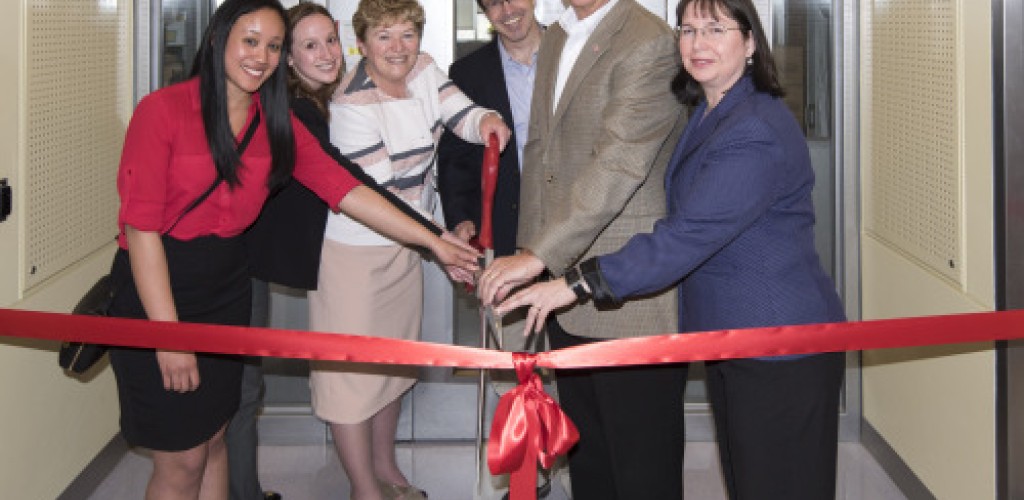
The Rich’s Food Safety Lab officially went into service April 28 as Cornell expands its position as a global leader in food safety.
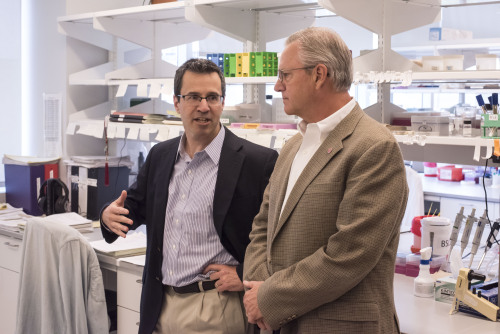
Located at 352 Stocking Hall, the Rich’s Food Safety Lab is home to unique molecular biology and classical microbiology technology and processes that address food safety issues along the whole supply chain. The 1,396 square foot facility will be used by a number of different faculty and their research groups at Cornell.
Designed to facilitate collaborative efforts with researchers from all areas of the Department of Food Science, the lab will provide a unique environment in which to foster interdisciplinary approaches to ensuring a safe global food supply. The lab enhances Cornell’s position as the global leader in using systems approaches in assuring food safety.
Kevin Malchoff ‘74, MBA ‘75, a director on the board of Rich Products Corporation, helped inaugurate the new lab along with CALS alumnae Kristin Alongi, M.S.’10 and Rochelle DeLoach ‘14. Alongi is director of portfolio and governance and DeLoach is a food technologist at Rich Products Corporation, a leading supplier and solutions provider to the foodservice, in-store bakery and retail marketplaces and a world leader in non-dairy toppings, icings and other emulsions.
“Rich Products has a long history as a leading global foodservice supplier; a history matched by that of the Department of Food Science in food safety,” said Kathryn J. Boor, the Ronald P. Lynch Dean of Cornell University’s College of Agriculture and Life Sciences. “Rich Products’ gift of the Rich’s Food Safety Lab is a permanent, physical embodiment of the powerful partnership our two Upstate institutions have established. Rich Products’ generosity will allow Cornell to build on its legacy of leadership in food safety while facilitating future interdisciplinary, collaborative efforts — using state-of-the-art technologies — to ensure a safe and wholesome global food supply from New York to New Delhi.”