Typhoon Yolanda barreled towards the Philippines with winds topping 195 MPH on November 8, 2013, killing more than 6,300 people and inflicting over $2 billion in damages. For a nation of more than 7,000 islands in the western Pacific Ocean, the natural beauty of its landscape is tempered by its vulnerability to typhoons, earthquakes, volcanoes, and the expected dangers of a rapidly changing climate. Now one Cornell researcher is using his expertise in disaster to help the country rethink how it responds when things go wrong.
Keith Tidball, senior extension associate in the Department of Natural Resources and director of the New York Extension Disaster Education Network (EDEN) program, part of a larger national effort funded by USDA, and , focuses on helping communities prepare for and respond to the disasters that threaten lives and livelihoods. He recently worked as a Visiting Scholar at USDA’s National Institute for Food and Agriculture outlining a plan for how the USDA and its disaster education program could better serve international partners and allies.
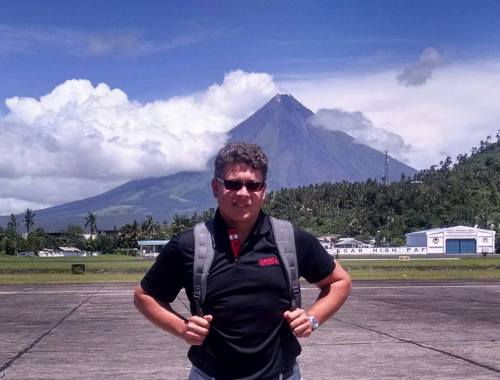
In the fall, Tidball was part of a US delegation that met with high-ranking officials from the Philippine government, agriculture, energy and military sectors to discuss how the American model of disaster response — with its emphasis on utilizing cooperative extension’s expertise and experience with communication and collaboration — might benefit the Philippines. His mission: provide technical assistance with the goal to build a replica of the U.S. Extension Disaster Education model that can be deployed by the Philippine Agricultural Training Institute to better respond to tragedy.
“Traditionally, international partners of the U.S. Cooperative Extension System haven’t experienced its potential as an enterprise for social networking — as a dissemination tool and a community capacity builder in the disaster context ,” said Tidball. “Giving those partners access to the knowledge we have developed is a big innovation that could save countless lives.”
That could particularly be true in the Philippines. The coastal nature of the island nation and its high rates of poverty leave it vulnerable to storms and climate change. Agriculture employs roughly one-third of total workers in the country, amplifying the potential economic devastation of violent storms.
Improving communication offers a critical step to help the Philippines cope with natural disasters, according to Tidball. In the U.S., disaster relief relies on government and community agencies to coordinate and efficiently share information with the public. NY EDEN, as an affiliate of both Cornell University Cooperative Extension (CCE) and the national U.S. Department of Agriculture EDEN network, uses CCE’s outreach capabilities to link the emergency preparedness resources in New York.
Tidball says the cooperative extension structure in the U.S. has the skills, resources and the human capacity to be effective at all points of a disaster by utilizing a robust communication apparatus and a deep repository of experiential knowledge. Providing international partners with a framework extends the ability of officials to share information with the communities threatened by natural and manmade disasters, he said.
Beverly Samuel, USDA National Program Leader for Housing and Environmental Health and the leader of the U.S. delegation to the Philippines said “the progress of the project can be attributed to the buy-in of high level officials in the Philippines and the agency leaders that will work with stakeholders, including farmers and fisherfolks, at the grassroots level. The U.S. delegation from EDEN continues to provide technical assistance to the Philippines partners in their effort to develop Philippines EDEN. As a result, there will be reciprocal benefits to both nations through lessons learned about disasters.”
Tidball said efforts to share best practices extend beyond the more typical farming concerns. “Here’s a classic example of Cornell being ‘extension to the world.’ This is not traditional agricultural extension: On these large life-and-death scale situations, we are developing a novel and innovative role for extension,” he said.
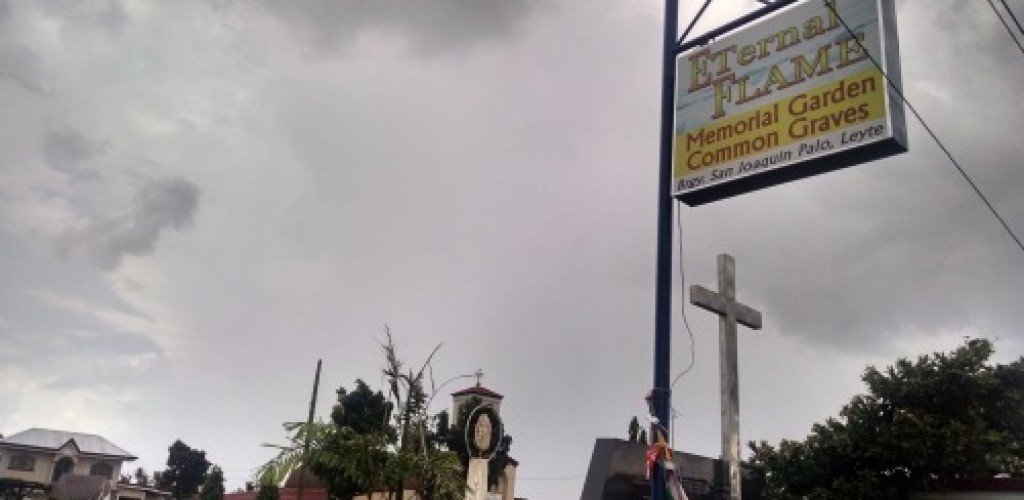
More than three years after Typhoon Yolanda made landfall there still remain areas devastated throughout the country. Tidball toured some of the worst areas hit by the storm, where he saw mass burial sites created in the aftermath of the storm. His goal, he said, is to reduce the risks people in the Philippines will continue to face.
“It makes it that much more meaningful to share best practices and cooperate with your brothers and sisters in some other countries dealing with these threats,” he said. “These aren’t vulnerabilities that are going away.”
Tidball’s participation in the USDA Philippine delegation was facilitated in part by Cornell International Programs and Cornell Cooperative Extension, and by the Philippine Department of Agriculture’s Agricultural Training Institute.