Back

Discover CALS

See how our current work and research is bringing new thinking and new solutions to some of today's biggest challenges.

Share
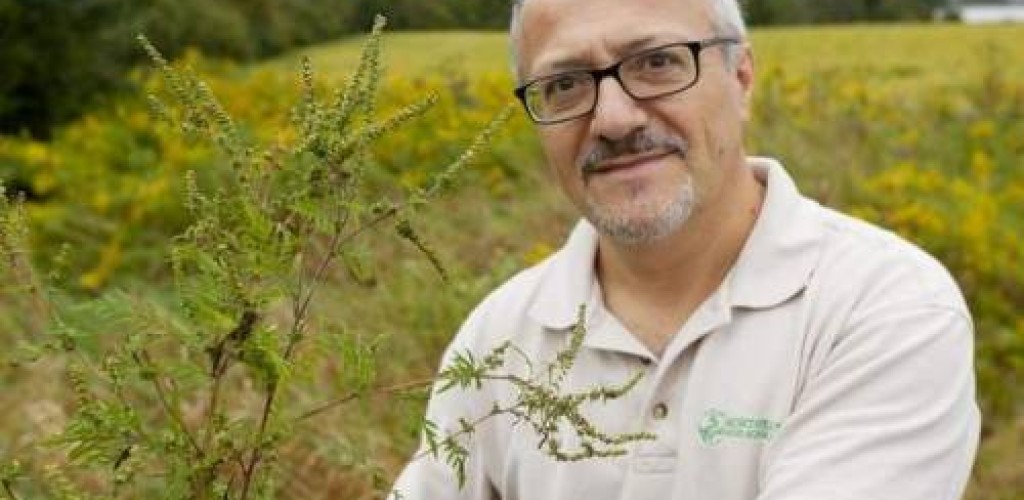
In his 16 years of teaching at Cornell University, Antonio DiTommaso has taught more than 1,000 students in his weed science and integrated pest management courses. The evaluations of many of these students contributed to the decision of The Crop Science Society of America (CSSA) to award professor DiTommaso with this year’s Crop Science Teaching Award.

Professor DiTommaso is a professor in Soil & Crop Sciences section in the School of Integrative Plant Science and the Richard C. Call Director of Agricultural Sciences. He currently teaches two undergraduate courses and one graduate course, while also conducting research and advising students in the Weed Ecology & Management Laboratory.

This award is presented based on an evaluation of criteria from peer and student evaluations. These include innovative approaches to encourage learning, and student-teacher interactions. In his own words, professor DiTommaso describes his teaching philosophy as “founded on respect both for students as individuals and for the pedagogical process. My approach is based on the following belief: As students become active observers, they will be motivated to seek and learn new ways to discover, problem-solve, collaborate, and develop critical thinking. Thus, it is my role and responsibility as a teacher, to seek ways to stimulate, encourage, and enhance students` curiosity.”

It is through this approach that he will be recognized for his accomplishments at the CSSA’s International Annual Meeting, November 15-18, 2015 in Minneapolis, MN.

A well-earned congratulations to professor DiTommaso from his students, CALS, and Cornell!

Keep Exploring

Several red 'Crimson Beauty" raspberries hang from green leaves and stems.

Report

Relevance Raspberry and strawberry production in the United States is concentrated in California and Florida, where climate variability and rising costs challenge long-term sustainability. Demand for locally grown fruit is increasing, creating...
  • Cornell Cooperative Extension
Charles Midega (left) and Roy Odawa display the Kontiki kiln they modified to make biochar from human feces. Credit: Rebecca Nelson

News

Cornell researchers and Kenyan partners have developed a fertilizer made from human excreta. The product improves soil health and food production, while preventing pollution in informal settlements and the aquatic environment.

  • Ashley School of Global Development and the Environment
  • Global Development Section
  • Agriculture
