

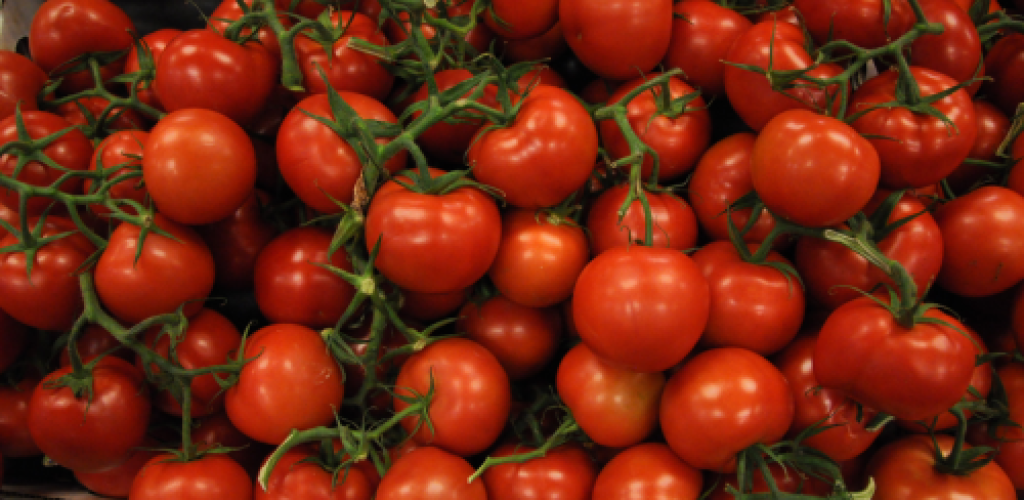
Plant researchers and home gardeners learned about efforts to preserve ancient traits in the tomato at Mann Library’s Harvesting Heritage event June 5.
CALS Plant Breeding and Genetics Professor James Giovannoni, a researcher at the Boyce Thompson Institute and the USDA Agricultural Research Service, explained why store-bought tomatoes taste so bland and what plant researchers are doing to fix it.
Tomatoes are a $3 billion business in the U.S., with most tomatoes grown at high-density farms in California and Florida. To ensure these fragile fruits survive a cross-country trip to the grocery store, breeders have created tomatoes that won’t rot in transit by controlling the ripening process.
A ripening tomato goes through a lot of changes to attract consumers. “It suddenly goes through a program that says ‘eat me,’” said Giovannoni. Ripening also makes the fruit susceptible to bacteria and fungi, which release tomato seeds when the fruit rots.
But rotten tomatoes are bad for business, so researchers have bred several traits into commercial tomatoes to delay the process.
In the early 1960s, Cornell professor Henry M. Munger discovered a tomato mutation that causes the fruit to ripen slowly. This characteristic has been bred into all major commercial tomato varieties, giving farmers two extra weeks to get their produce to market. Breeders also have created varieties that ripen simultaneously for more efficient harvesting and that lose their stem when picked to protect the flesh during transport. Without this change, “by the time you get to the end of the road, you’re salsa at best,” said Giovannoni.
But some of these changes resulted in tasteless produce. In his current work, Giovannoni is crossing modern tomatoes with ancient varieties to understand the genetics behind flavor and nutrition.
Patricia Waldron is the staff science writer for the Boyce Thompson Institute.This article was originally published in the Cornell Chronicle.


