By John Carberry
Six years ago, when a contented Ignacio “Iggy” Saldana cruised out in the back of the pack from Adlai Stevenson High School in The Bronx and slid into a comfortable routine of slow mornings and afternoon basketball, he never saw this coming.
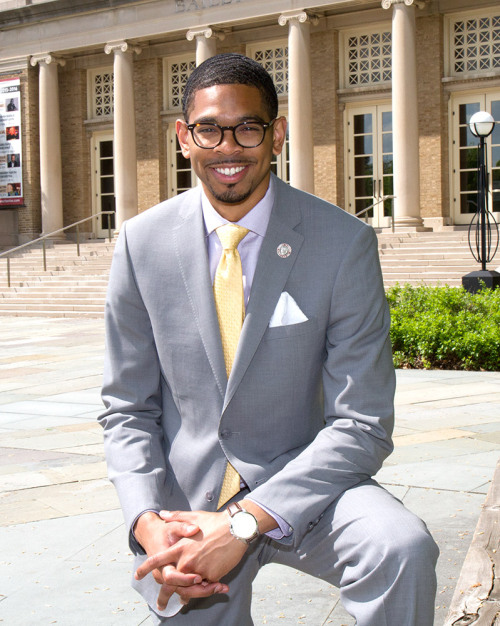
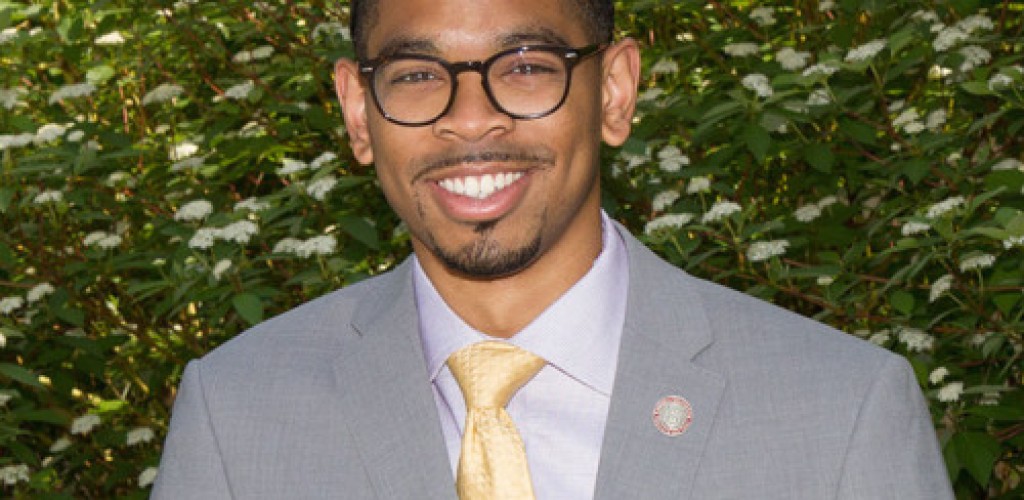
“I really don’t know how I got this far,” said Saldana, just hours after leaving his last exam on the way to a bachelor’s degree in development sociology from Cornell University – an interstellar trajectory that continues with first-year law study at Columbia University this fall. “Fortunately, with a lot of help from a lot of people, I made it.”
“Iggy reminds us of the best of who we are and what we all hope to do. His fight to get here is a testament to ‘any person, any study,’ and his determination to return to help his family and others is a living example of the very heart of the land grant mission.”
– CALS Dean Kathryn J. Boor
Making it may have started out easy, but it didn’t stay that way long. Back in 2009, then 18-year-old Saldana enjoyed that comfortable Bronx routine. The oldest of seven siblings, Saldana’s mother, Harlem native Cynthia Saldana, insisted he walk his siblings to school every day and pick up groceries, but demanded little else. The bulk of the day, Iggy Saldana recalls, was cartoons on TV and late afternoon basketball with friends.
“Everything was pretty cushy for me in the Bronx,” Saldana said. “It was pretty good.”
But life’s one constant, change, was not far off. His mother had to move her family out of the neighborhood Saldana knew, out of the cushy Bronx, into the south side of Jamaica in Queens. The emergency move triggered a series of bureaucratic snags, the end result of which was Saldana, his mother and six siblings lost the public assistance they needed to survive. No aid with rent, groceries or childcare costs. The family was forced to rely on food pantries and church charities and increasingly raw will. His mother fought to support her children, and the fight took its toll. To endure, she turned to her eldest son as a confidant.
“I think that was the moment when I really had to mature,” Saldana said. “I realized I was the oldest man in the house, and she couldn’t do it by herself.”
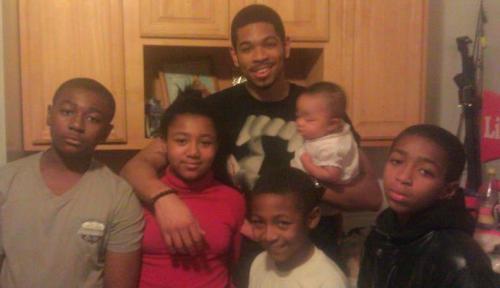
Saldana promised his mother that if she could find the cash, he’d shave, get a haircut and find a job. She did, he did, and the family weathered the storm.
Saldana kept his job at a nearby McDonald’s for two years, taking extra hours as often as he could. He dreamed basketball could save his family, and talked with coworkers about heading to Duke University, the University of Kansas or some other NCAA powerhouse on his way to the NBA. He admits now that he’s “actually a very poor basketball player,” but added that back then, he couldn’t imagine another way to the better life that storm made him desire.
One night after working late, he struck up a conversation with the franchise owner. Saldana remembers that he he’d come in “wearing Ralph Lauren everything,” joke around with everyone, collect the night’s receipts and head out to the next store in his new car.
“So I asked him, ‘How do I do that?’” Saldana remembered. “He told me, ‘You’re never going to be able to do this without an education.’”
So he mixed his old fantasy with his new ambition, and tried to find out how he could become a big time scholar-athlete. He looked for advice from everyone he thought might know how. Ultimately, a doctor at a health care clinic steered him to a college prep office upstairs. He walked up and told the woman he was headed to Duke to play basketball. With no SAT scores and a high school transcript painted with C’s, she grabbed a SUNY catalogue and suggested he find another door in.
Still seeing education as an accelerant into the NBA, Saldana spotted Tompkins Cortland Community College. He said he didn’t pick it because of it’s highly diverse student population, it’s standout record for transferring students to leading four-year institutions, or its proximity to its number one transfer partner – Cornell University. Instead, he liked the on-campus housing and the look of its vertically limited basketball roster.
“I would have made that team easy,” the 6-foot-4-inch former neighborhood-league power forward said.
With the help of a lot of people, Saldana applied for and got accepted to TC3. With the support of his siblings and his mother, he worked for months to save $1,000 to help make the trip north happen. Then, in the fall of 2011, the 20-year-old would-be freshman bought a bus ticket to Ithaca and left New York City behind.
“It was the most challenging thing, leaving my neighborhood and leaving my siblings behind,” Saldana said. “But my mother told me the best thing I could do for my siblings was to be a role model. So I left.”
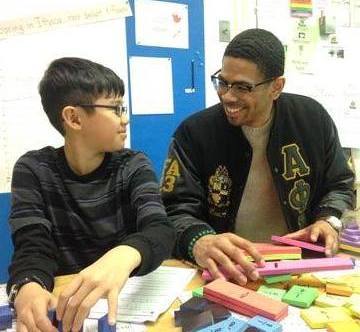
Life as a community college student in Dryden was “a culture shock.” While TC3 has a solid Big Apple contingent, Saldana said he was shocked by the number of international students at the college and, in spite of one prior visit, he was still shocked by living and studying with so many white people.
“Aside from taking an order, I had never interacted with someone who wasn’t black or Hispanic,” he said.
The biggest shock, however, was self made.
Saldana enjoyed social time with his NYC peers in the schools cafeteria, but he found himself increasingly determined never to go back to the life of high school skills in a service economy. That determination gave him the strength to shed the part of his dream he knew was fantasy, so hard-court ambitions fell aside and Saldana started to dig into his coursework.
When his first semester grades came in, Saldana was the owner of a 3.4 grade-point average.
“That definitely clicked,” he said, still seemingly surprised. “I stepped it up from there tremendously.”
He faced more trails while at TC3, more moments of doubt and occasional calls from a struggling family member that made him wonder why he was so far away. He credits faculty and staff mentors with helping to keep him going, keep him focused on the future, and introducing him to politics, student government, peer mentoring and one other previously unimagined notion:
“That I could go to Cornell,” he said. “They saw something in me that I didn’t see myself.”
He had a new ambition. He chose his courses based on what might make him the strongest transfer candidate, and ran semester after semester of 4.0 GPAs. He became student government president. He stayed for a fifth semester at TC3 to improve his academic profile.
“There was no way I was not going here,” Saldana said. “And fortunately, with a lot of help from a lot of people, I got in.”
At Cornell, he found his dream major in the Department of Development Sociology, a discipline he called a combination of everything he was interested in – politics, economics, people and community outreach. Saldana also found his “big league” stride. He upped his commitment to academics, read every assignment twice, and made sure nothing was ever left late or undone.
At the end of his first semester as an Ivy Leaguer, Saldana delivered a fresh lineup of straight A’s. That, he said, finally convinced him he belonged.
“I was like, ‘Whoa, look at me!’” he said. “That’s what did it.”
Now convinced he belonged, he needed to do more. He knew struggle, he knew self-doubt and he knew culture shock, and he knew he had to finds ways to help people facing those same challenges.
Saldana reached out and was welcomed by Alpha Phi Alpha, the Cornell-born fraternity founded as the nation’s first African-American intercollegiate Greek organization in 1906. Calling it “one of the best moves I ever made,” Saldana said he found tradition, support and a network of peers who help him discover the Ivy League’s most diverse campus. He credits his Alpha brothers with teaching him the mindset of the successful student, and with introducing him to many programs designed to help underrepresented minority students across campus.
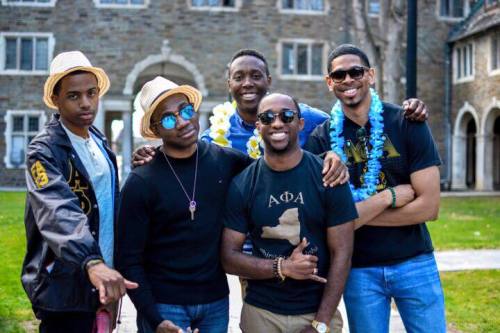
Over his two years at Cornell, Saldana grew into new scholarly and service roles. He became the political action chair for Black Students United. He invested his time and talents to Practice Makes Perfect, a non-profit organization founded by School of Hotel Administration graduate Karim Abouelnaga that combats educational inequality by bringing summer learning programs to socioeconomically disadvantaged neighborhoods.
Most recently, again through his Alpha connections, Saldana joined a group of peers exploring ways to improve the experience of diverse students who come to the College of Agriculture and Life Sciences. On April 30, the panel presented its findings to Dean Kathryn J. Boor and the CALS Advisory Council. Saldana said they made three recommendations:
· Expand the Intergroup Dialogue Project course and make it a requirement for all incoming students. The course puts students from “target” and “agent” groups along several social fault lines together in peer-facilitated small group conversations.
· Create a formal peer mentorship program to connect freshman and sophomores with more experienced undergraduate peers.
· Create a “transfers helping transfers” program to match incoming underrepresented students with successful students at Cornell who’ve made that same transition.
“There’s no life I’m going to live where I’m not going back to help, to make the world less arduous for the next group of kids coming up. Breaks are given to far too few in this world. If I can do it justice by giving someone else that opportunity, I have to. I’m obligated to do so.”
– Ignacio “Iggy” Saldana
Both the presentation and the person made an impression.
“Iggy reminds us of the best of who we are and what we all hope to do,” said Dean Boor. “His fight to get here is a testament to ‘any person, any study,’ and his determination to return to help his family and others is a living example of the very heart of the land grant mission.”
For Saldana, he plans to define his efforts going forward by how they serve a powerful and simple mission.
“There’s no life I’m going to live where I’m not going back to help, to make the world less arduous for the next group of kids coming up,” Saldana said, delivered not as an energized boast, but with the calm matter-of-factness of a man who’s already living his promise. “Breaks are given to far too few in this world. If I can do it justice by giving someone else that opportunity, I have to. I’m obligated to do so.”
His plans will also be measured by how they serve another, very personal, motive – how each step helps his family find a better life.
That’s one reason why he’s looking forward to this weekend’s convocation and commencement. Thanks to the generosity of friends he’s made in Ithaca who are opening up their home, Saldana’s entire family will be at Shoellkopf Field to see him collect the Ivy League degree this “any person” earned. The big prize for him, Saldana insisted, is that his mother, two aunts, an uncle – and most importantly all six of his younger siblings – will see him demonstrate a success that too many he remembers from The Bronx and Jamaica still believe is too alien to take seriously.
Living that lesson also was at the heart of his decision to head to Columbia for law school, back to Harlem where his mother grew up. He wants to be close enough to see, to visit from the family’s new home on Staten Island.
“It’s so they can come see me,” Saldana said. “If I can add a picture to what I’m trying to tell them about what life is like on the other side, I think that will be worthwhile.”
John Carberry is managing editor of the College of Agriculture and Life Sciences.