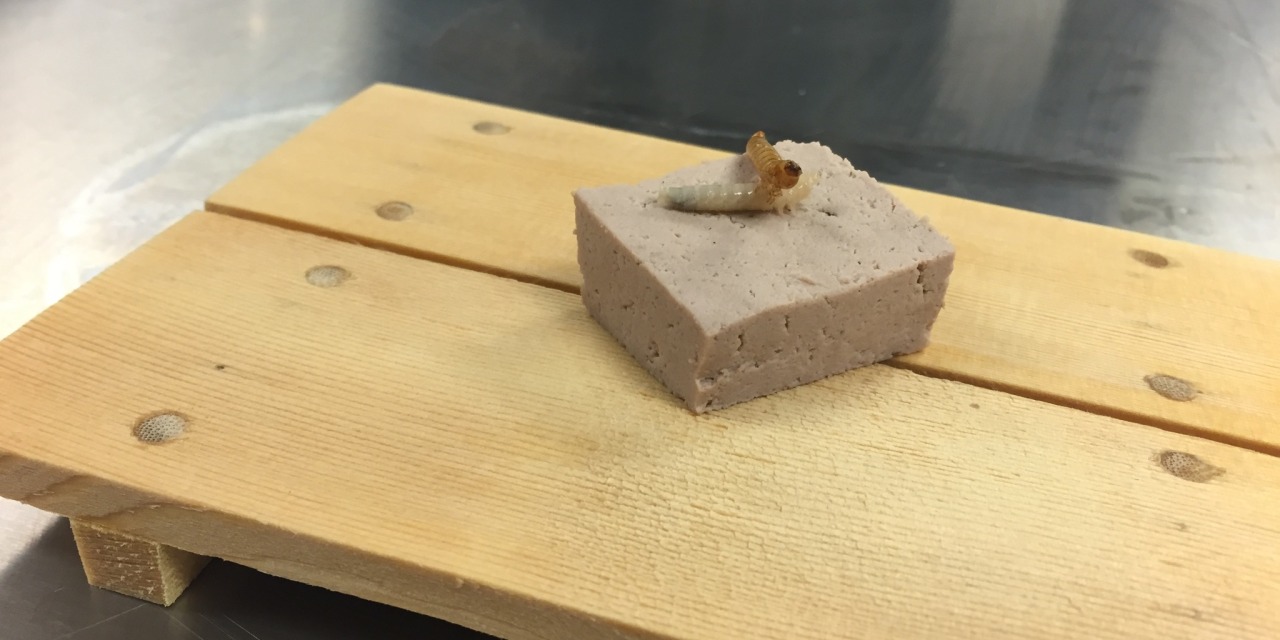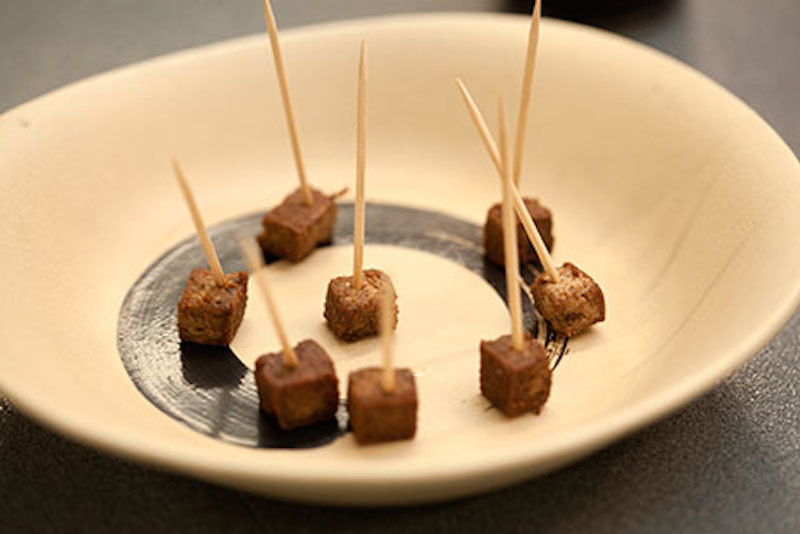
Think tofu but with a creepy-crawly, sustainable twist: A Cornell food science team will compete Feb. 14 at the Thought for Food Global Summit in Lisbon, Portugal, with C-fu – a new protein product made entirely of crushed mealworms – that may help feed the world’s booming population, a projected 9 billion people by midcentury.
“C-fu can do a lot of things because it’s not just a single product. It’s a raw material that can be the platform for a whole new array of insect-sourced foods. It’s analogous to fresh cheese or tofu, which can be modified or reprocessed into hundreds or even thousands of very different foods,” said Lee Cadesky, a graduate student in the field of food science, who leads the team.
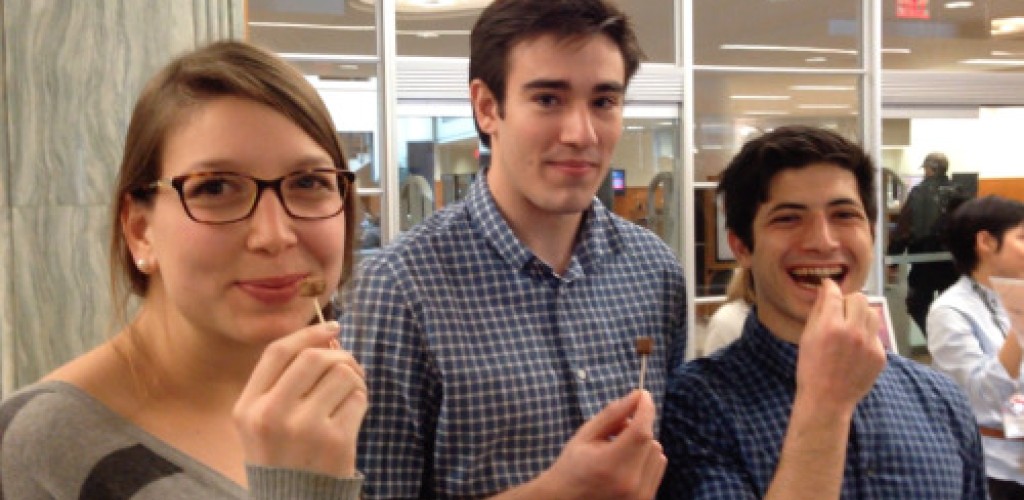
Cadesky and his team – Rachel Saputo, a graduate student in the field of applied behavioral economics; Dan Caticha ’16, biology; and Eli Cadesky, Lee Cadesky’s brother and an MBA candidate at the York University Schulich School of Business, Toronto – competed with 350 colleges in 51 countries for one of the final 10 spots at the Thought for Food competition. The grand prize is $10,000. The other global finalist teams are from England, Sweden, Uganda, Bangladesh, India, Australia and Brazil.
More at the Cornell Chronicle …