Before Fanjaniaina Fawbush, Ph.D. ‘09, came to Cornell, she dreamed of working for Chocolaterie Robert, one of a few chocolate factories in Madagascar, but openings there were rare.
Now back in Madagascar after completing her doctorate on post-harvest preservation of fruits and vegetables, she has come full circle as a quality control and research and development manager at Madécasse Chocolate & Vanilla, a company based in Brooklyn, New York, and Antananarivo, Madagascar, that was launched in 2006 by two Peace Corps volunteers who served in Madagascar.
Fawbush, who used her maiden name of Razafimbelo at Cornell, credits her course work in horticulture, food science, and biological and environmental engineering with giving her the skills to study the cocoa industry and become a chocolatier at Madécasse, which she joined in February.
“The courses and the teachers and the way the courses were designed at Cornell helped me a lot because they provided the right approach and the tools necessary to help in my chocolate-making on this scale at Madécasse,” says Fawbush, who is also an associate professor at the University of Antananarivo, where she teaches biochemistry, food chemistry and new product development.
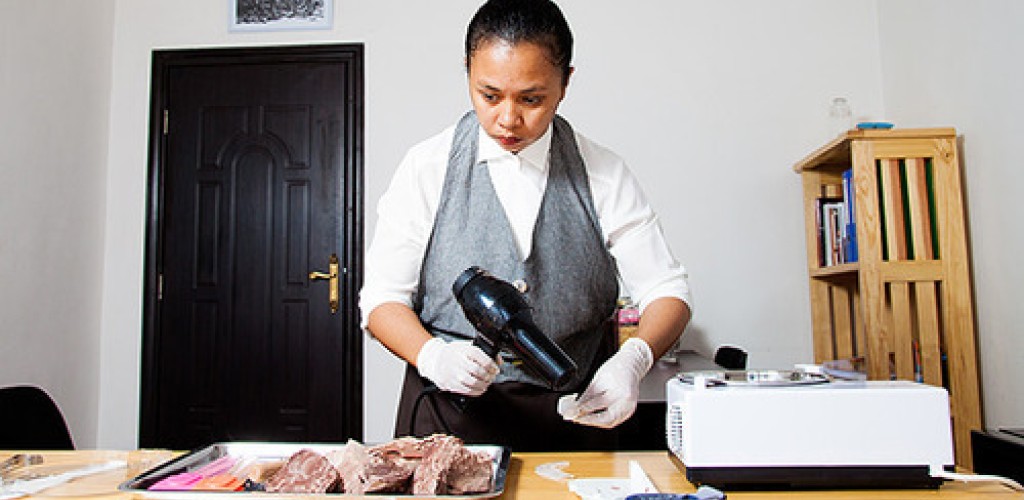
“I had to order all the equipment and make the lab from scratch, and then make chocolate for the first time, and it had to be a bar that was very good,” she says. “I was pretty happy with it. I did research prior, but all the background and approach was from the [Cornell] training.”
Find the full article here.