

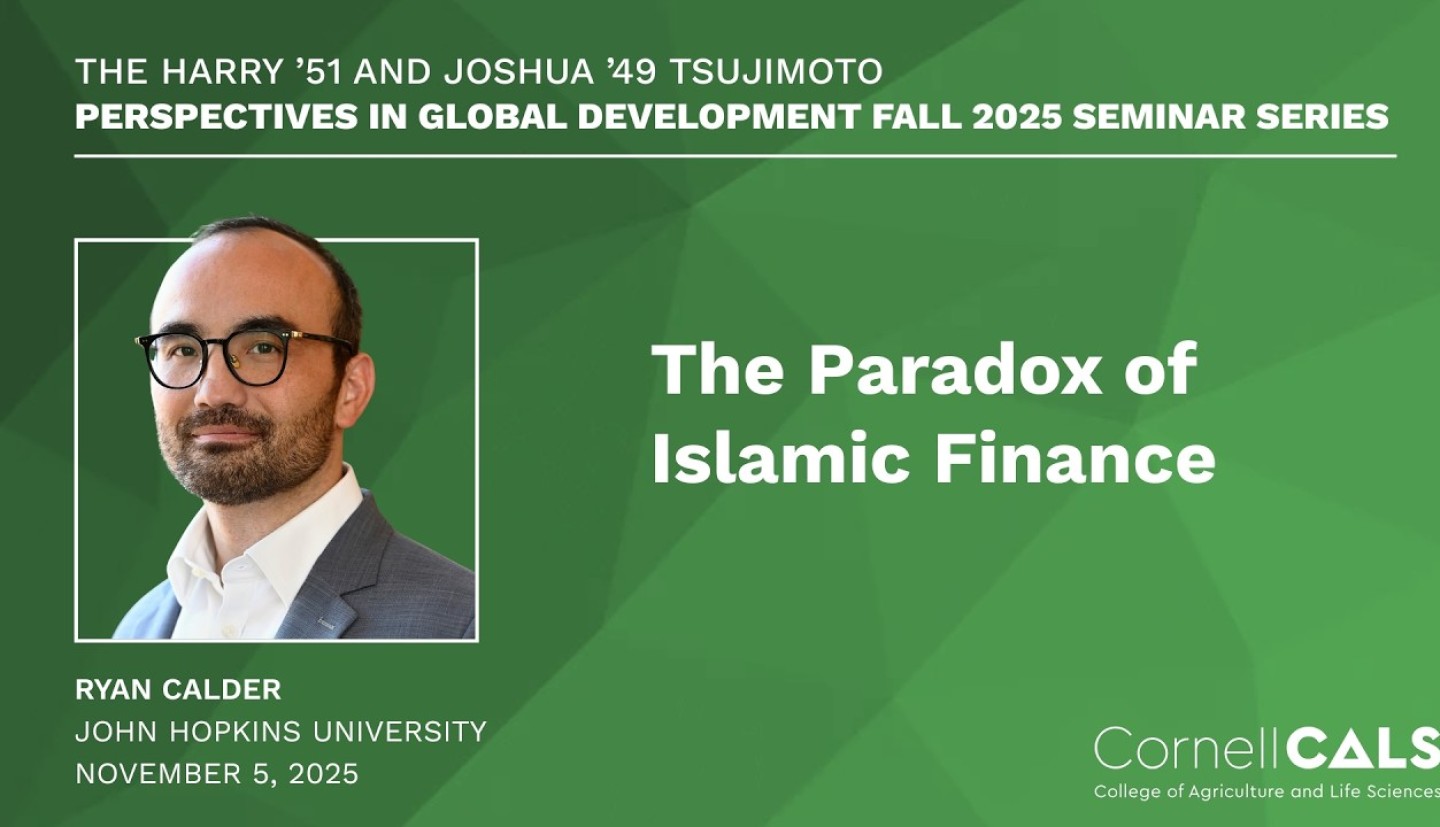
Fall 2025 Harry ’51 and Joshua ’49 Tsujimoto Perspectives in Global Development Seminar Series
About the speaker
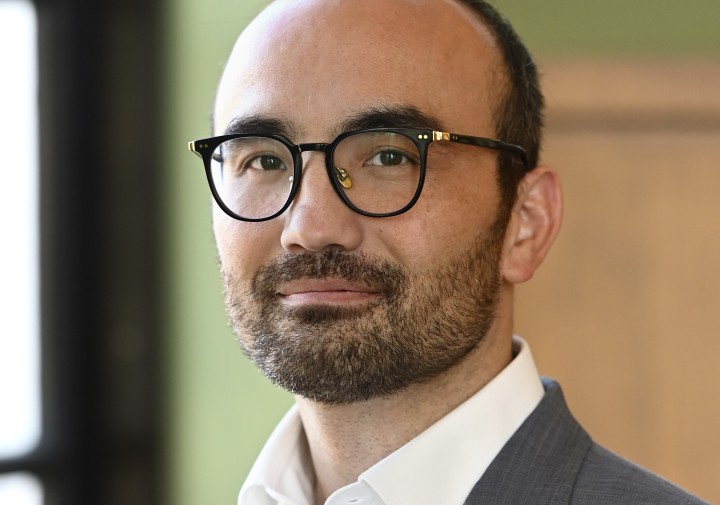
Ryan Calder is associate professor of sociology and director of the Program in Islamic Studies at Johns Hopkins University. He studies the moral quandaries and ethical debates that arise when new markets and industries are born or existing ones change suddenly. Currently, he is pursuing one project on frequent-flyer miles and the financialization of travel, another on Saudi Arabia in the age of climate change and unprecedented domestic social reform, one collaboration on NIL and the emergence of a labor market in college sports, and another collaboration on “anti-woke” right-wing platforms for e-commerce and digital payment.
Abstract
About the seminar series
The Harry ’51 & Joshua ’49 Tsujimoto Perspectives in Global Development Seminar Series showcases innovative approaches to development with experts from around the globe. Each year, the series attracts online registrants from over 45 countries and more than 350 organizations.
Seminars are held Wednesdays from 12:20-1:10 p.m. eastern time during the semester in 175 Warren Hall. Students, faculty and the general public are welcome to attend in-person or via Zoom.
The series is co-sponsored by the Department of Global Development, the Department of Natural Resources and the Environment, and the Charles H. Dyson School of Applied Economics and Management as part of courses GDEV 4961, AEM 4961, NTRES 4961, GDEV 6960, AEM 6960, and NTRES 6960.
Date & Time
November 5, 2025
12:20 pm - 1:10 pm
Location
More information about this event.
Contact Information
Mariah Doyle-Stephenson
- md2237 [at] cornell.edu
Speaker
Ryan Calder, John Hopkins University
Departments
Global Development Section
Natural Resources and the Environment Section
Charles H. Dyson School of Applied Economics and Management
Related Events

Seminar

Lecture

We openly share valuable knowledge.
Sign up for more insights, discoveries and solutions.