

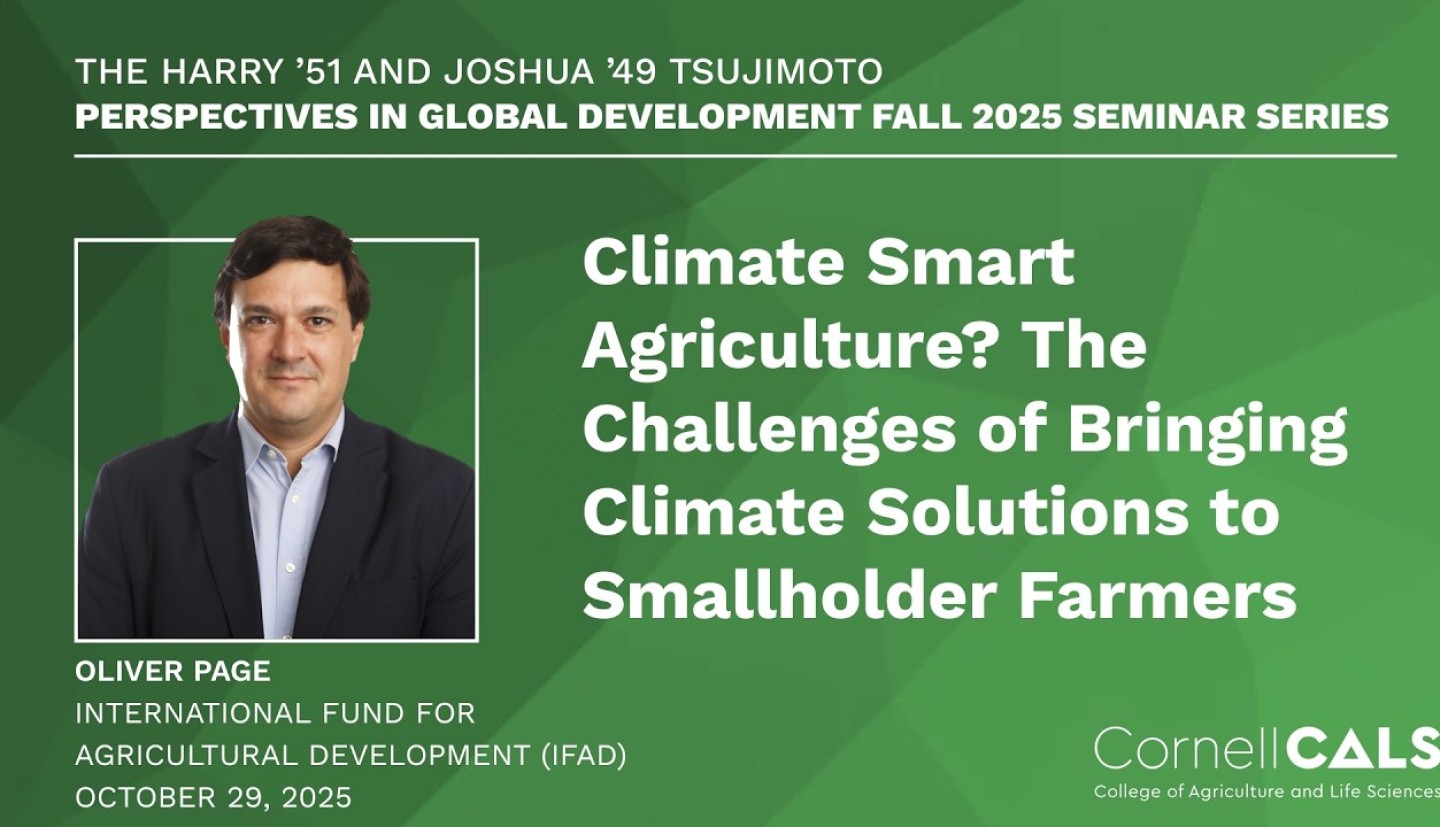
Fall 2025 Harry ’51 and Joshua ’49 Tsujimoto Perspectives in Global Development Seminar Series
About the speaker
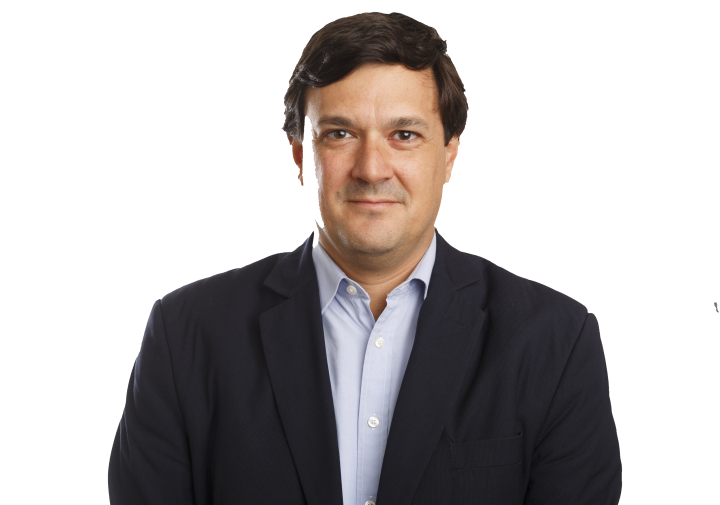
Oliver Page is the Lead Climate and Environment Specialist for the Latin America and Caribbean Region at the International Fund for Agricultural Development (IFAD), a specialized agency of the United Nations and international financial institution committed to eradicating poverty and hunger in rural areas of developing countries. With over 20 years of experience, Oliver has led the integration of climate change adaptation and mitigation strategies into rural development initiatives across the region. He is also an expert in mobilizing resources from global climate finance mechanisms—including the Green Climate Fund and the Global Environment Facility—to amplify the climate resilience and sustainability of development projects. Oliver holds a Master’s degree in Environmental Policy from Columbia University’s School of International and Public Affairs and a Bachelor’s degree in Environmental Engineering from Cornell University.
Abstract
Smallholder farmers produce a large share of the world’s food yet remain highly vulnerable to climate change. Rising temperatures, erratic rainfall, and soil degradation threaten their livelihoods and food security. While climate solutions promise to improve resilience and sustainability, turning these ideas into reality for millions of smallholders in developing countries is far from simple.
This talk explores the main challenges to implementing climate-resilient practices, drawing on lessons from IFAD-supported projects in Latin America and the Caribbean. Barriers include limited access to finance, markets, and climate information, alongside policy gaps and weak institutions. Social factors—such as gender inequality, insecure land tenure, and the marginalization of Indigenous communities—further complicate adoption.
Through real-world examples, we will examine how participatory approaches, local knowledge, and innovative partnerships can help overcome these obstacles. Case studies highlight value chains that integrate resilience, community-led adaptation planning, and the use of digital tools alongside traditional farming systems.
Finally, the session reflects on the role of research and innovation—and how students can contribute through interdisciplinary work, policy engagement, and grassroots initiatives. By centering smallholders in solutions, we can build agricultural systems that are climate-ready, equitable, and sustainable.
About the seminar series
The Harry ’51 & Joshua ’49 Tsujimoto Perspectives in Global Development Seminar Series showcases innovative approaches to development with experts from around the globe. Each year, the series attracts online registrants from over 45 countries and more than 350 organizations.
Seminars are held Wednesdays from 12:20-1:10 p.m. eastern time during the semester in 175 Warren Hall. Students, faculty and the general public are welcome to attend in-person or via Zoom.
The series is co-sponsored by the Department of Global Development, the Department of Natural Resources and the Environment, and the Charles H. Dyson School of Applied Economics and Management as part of courses GDEV 4961, AEM 4961, NTRES 4961, GDEV 6960, AEM 6960, and NTRES 6960.
Date & Time
October 29, 2025
12:20 pm - 1:10 pm
Location
More information about this event.
Contact Information
Mariah Doyle-Stephenson
- md2237 [at] cornell.edu
Speaker
Oliver Page, International Fund for Agricultural Development (IFAD)
Departments
Global Development Section
Natural Resources and the Environment Section
Charles H. Dyson School of Applied Economics and Management
Related Events
Seminar
Lecture

We openly share valuable knowledge.
Sign up for more insights, discoveries and solutions.