Back

Discover CALS

See how our current work and research is bringing new thinking and new solutions to some of today's biggest challenges.

Search for News & Stories
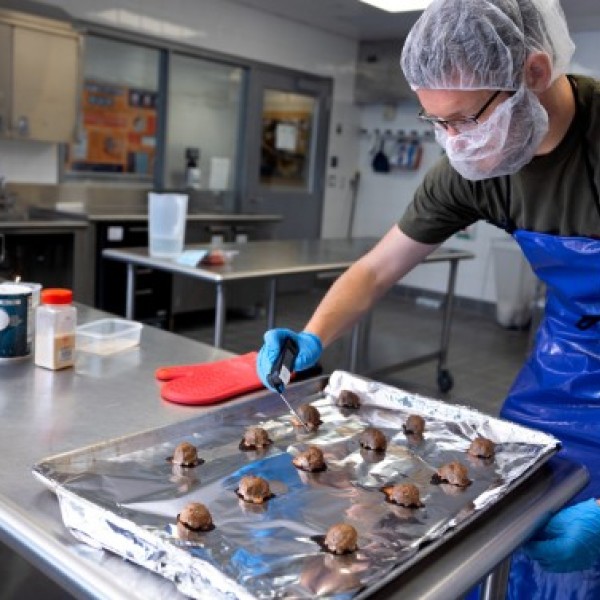
Doctoral student Peter Gracey works in the Leslie J. Herzog ’77 and Jacqueline Beckley Food Innovation Lab.

News

Mmm, what's in these meatballs? A secret ingredient that would improve human health as well as apple producers' bottom line.

  • Cornell Food Venture Center
  • Food Science
  • Food
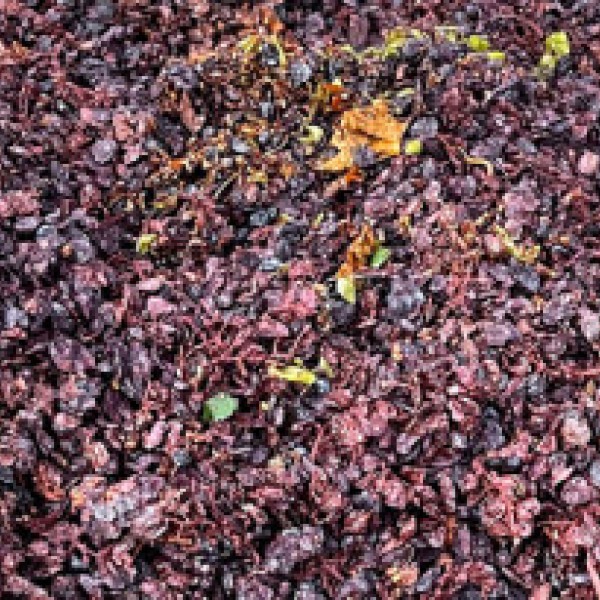
A container full of grape pomace

News

Grape pomace, a waste stream from the wine and table grape industry, may improve the gut health of poultry and other animals.

  • Food Science
  • Viticulture and Enology
  • Animals
Scientist sits at her desk examining a cross section of an embryonic chicken’s small intestine.

News

The grain could provide a more affordable alternative for the poultry industry, where about three-quarters of costs are tied up in feed.

  • Food Science
  • Field Crops
  • Animals
Benjamin Z. Houlton, the Ronald P. Lynch Dean of the College of Agriculture and Life Sciences, shares his insight on climate-beneficial technology during a panel at the 2023 Grow-NY Summit in Binghamton.

News

The sixth annual Grow-NY Summit, to be held Nov. 6-7 at the Ithaca Downtown Conference Center, will feature business leaders and entrepreneurs working to advance sustainability, address global challenges and shape the future of food and...

  • Cornell AgriTech
  • Food Science
  • Agriculture
Hands connect wires in a cup suspended between leafy plants.

News

The 20 finalist startups battling for $3 million in prize money in the fifth annual Grow-NY Food and Agriculture Business Competition were selected from more than 320 applicants, including 81 entries from New York state.

  • Center of Excellence in Food and Agriculture
  • Food Science
  • Agriculture
Cross-section of chicken intestine with cells that may be affected by food nanoparticles.

News

Metal oxide nanoparticles – commonly used as food coloring and anti-caking agents in commercial ingredients – may damage parts of the human intestine, say Cornell and Binghamton University scientists.

  • Cornell Atkinson
  • Food Science
  • Health + Nutrition
New York Lt. Gov. Antonio Delgado answers questions and offers life advice in a session for students moderated by Julie Suarez, associate dean for land-grant affairs, right.

News

New York Lt. Gov. Antonio Delgado engaged with students and faculty on topics ranging from biological engineering to nutrition to 4-H programs during his first tour of the Ithaca campus on Feb. 2.

  • Department of Communication
  • Nutritional Sciences
  • Biology

News

Six food and beverage producers from across New York took home shares of over $100,000 in prizes Friday at the first New York Concord Grape Innovation Awards, a business competition aimed at stimulating growth and innovation in the state’s...
  • Center of Excellence in Food and Agriculture
  • Cornell AgriTech
  • Cornell Food Venture Center
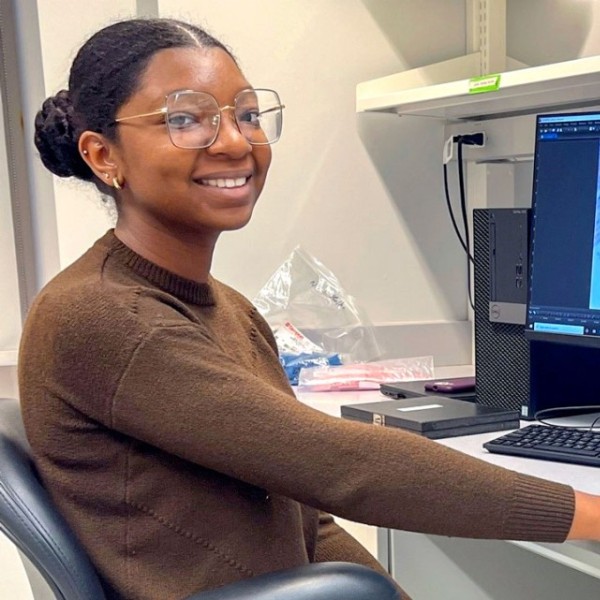
Female student smiles on the left, next to a computer showing an image from a microscope, which is on the far right of the image.

News

An apple a day may keep the veterinarian away. Juice, pulp and other waste from Empire apples, when injected into chicken eggs before hatching, show signs of boosting the animal’s health.

  • Food Science
  • Food
Group of fellows and faculty

News

At Cornell, the Turner Fellows are taking graduate courses and engaging in research, and on August 31, they were celebrated by the Cornell community at a welcome reception attended by Cornell faculty mentors, and program partners across the...
  • Global Development Section
  • School of Integrative Plant Science
  • Global Development
Student walks in front of campus building

News

Eight graduate students from 1890 land grant institutions across the United States have been selected as part of the inaugural cohort of Thomas Wyatt Turner Fellows at Cornell University. Representing a wide range of research specialties...
  • Animal Science
  • Biological and Environmental Engineering
  • Charles H. Dyson School of Applied Economics and Management
Zinc pills

News

Zinc deficiency is prevalent around the world, and among children, these mineral shortfalls can lead to stunting, embryonic malformations and neurobehavioral abnormalities.
  • Food Science
  • Food
  • Health + Nutrition
grapes in a vineyard

News

In a new Cornell-led food science study, researchers now demonstrate how viticultural trash could be a nutritive treasure. The group showed that two stilbenes – beneficial molecular compounds found in plants – can affect human intestines and the...
  • Food Science
  • Food
  • Beverages
multicolored beans

News

These microorganisms collectively make up an ecosystem known as the microbiome, and their well-being is intimately intertwined with our own. In the gut, microbes help regulate digestive health by processing essential vitamins and minerals and by...
  • Food Science
  • Food
  • Global Development
Green, long, spindly vegetation

News

Relatively new to the U.S., teff has long been a superfood in East African – specifically Ethiopia – as a staple food crop rich in fiber. Cornell food scientists, led by Elad Tako, associate professor of food science, now confirm this grain...
  • Food Science
  • Food
  • Health + Nutrition
students visiting the dairy farm

News

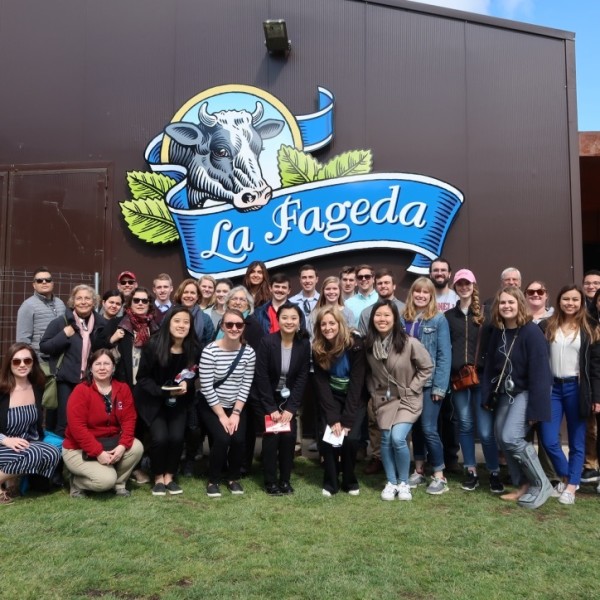
Twenty-five students from across the College of Agriculture and Life Science participated in a weeklong trip to the Catalonia region of Spain to study the food production system in Spain.
  • Charles H. Dyson School of Applied Economics and Management
  • Food Science
  • Food

News

A new study reveals that zinc deficiency – a condition that affects 25 percent of the world’s population, especially in the developing world – alters the makeup of bacteria found in the intestine.

  • Food Science

News

Unlocking ways to monitor a key nutrient, Cornell research unveils a new method to test for zinc deficiency, a vital measurement that has posed problems for doctors and scientists.

  • Food Science

News

It boasts thriving organic farming communities, a regional reputation for wine and a dairy industry that claims the highest average milk production per cow in the world. No, it’s not New York state, but Israel, where 15 students recently traveled for an intensive one-week trip.

  • Food Science