Back

Discover CALS

See how our current work and research is bringing new thinking and new solutions to some of today's biggest challenges.

Search for News & Stories

A mouse in a field of grass

News

When researchers "rewilded" lab mice to large, enclosed fields, even well-established anxieties in the mice disappeared.
  • Neurobiology and Behavior
  • Animals
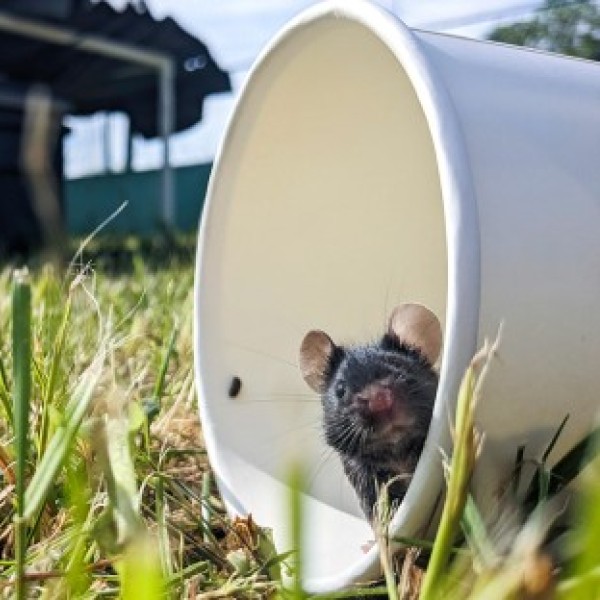
Mouse's head sticking out of a bucket that is laying sideways on green grass

News

Lucky breaks in a male mouse’s youth can lead to large advantages in adulthood, especially in groups that compete for food, territory and mates.

  • Animal Science
  • Neurobiology and Behavior
  • Animals
A lab mouse in an outdoor enclosure with dirt and grass.

News

Cornell researchers have found that when laboratory mice are placed in large outdoor enclosures, male behavior was essentially the same as genetically wild mice, but females displayed radically different behaviors.

  • Neurobiology and Behavior
  • Ecology and Evolutionary Biology
A large wasp body.

News

Genomic sequencing revealed that populations of wasps that recognized each other's faces – and cooperated more – showed recent adaptations in areas of the genome associated with cognitive abilities such as learning, memory and vision.

  • Neurobiology and Behavior
  • Behavior

News

Cornell researchers shined a new light – via thermal imaging of mice – on how male scent marking changes depending on shifting social conditions.
  • Neurobiology and Behavior
  • Animals
  • Behavior
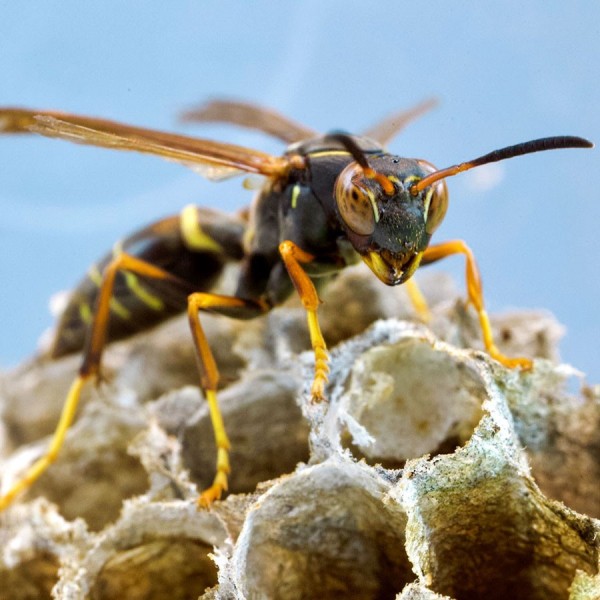
A wasp sitting on a paper wasp nest

News

Paper wasps (Polistes fuscatus) recognize the brightly colored faces of other paper wasps, an ability they lose when reared in isolation. The wasps’ ability to remember faces is similar to primates and humans, but unlike other social insects...
  • Neurobiology and Behavior
  • Animals
  • Entomology
Paper wasps creating a hive

News

New research indicates facial recognition abilities in paper wasps evolved relatively rapidly, suggesting that their increasing intelligence provided an incredible evolutionary advantage. This new research also sheds light on how intelligence evolves in general, which has implications for many other species – including humans.
  • Neurobiology and Behavior
  • Evolution
  • Entomology